Monday, December 02, 2024

Reflections

I look at my blog sometimes because there's something there I'd like to refer to, such as a cancer story, or something to do with work, or just because I'm prompted by a memory. My blog is really my public online diary. But that's OK, I know very few people read it, but it will be here for my family in the future, and for anyone who is casually browsing and finds one of my stories or posts on one subject or another.

I was looking through my cancer posts as there was news in the Telegraph that smear tests may be less invasive in future. Oddly enough, I had my latest test recently, because I had some HPV cells in my last one so instead of falling off the test list, I'm staying on for a while. Thankfully, all clear this time.

I wanted to share with colleagues how important it is to attend these tests, as uncomfortable as they may be. They really could mean the difference between life and death, or life and a more invasive treatment regime that would make the smear test pale into insignificance. By invasive I mean things like surgery, chemotherapy, radiotherapy. Catch it early, and you are likely to have a better cancer journey than many.

My cousin's cancer is back, but he is very stoic and - whilst having treatment - is fundraising for CRUK. He is confident that it will be kept under control - and he kept up his tests, so it was spotted early. I have had another colonoscopy because I had some abdominal pains, but they were clear. Yes, the colonoscopy was definitely 'not fun', and the results were negative, but I'm glad I went through it instead of leaving it to chance, and also letting the thought - and that can be almost as destructive as disease - continue to nag at me.

 The old mine, Adelong (C) 
Are you worried? Do you have something that doesn't feel right? Get it checked! Don't worry about your GP's time, that's what they are there for (and they'd rather treat you sooner too if there is any need). Are you worried it might be something, or nothing? Well something is a hell of a lot more worrying than nothing, so go get that check, and eliminate the uncertainty. You and your family will benefit from positive action, I promise.

But back to reflections, as well as looking back on my cancer journey (and Sheena's), I also read one of my posts about my visit to Malaysia and Borneo - and that's a memory I treasure. I wish I could go back and visit Baku forest again and see the proboscis monkeys, or cross the river in Kuching to taste one of those impossibly bright cakes they sell, or see a langur in the wild again. But, I did those things - how lucky am I? 

Look after you, as well as those around you. Follow up on those tests, anything that doesn't feel right. Check it out. 

Useful links:

Liked this? Try...

Thursday, October 24, 2024

An unusual childhood

I've written a bit before about the different childhood I had, but not in much detail (see Liked this? below). I could probably write a book, but instead here's a short poem. One thing my mother talks a lot about (she's 92 now) is regret. She can't undo the past, and there were so many good things, different things, that I learned that I would never have done without that childhood. I know how fabric should hang, and whether it is right for the period, for example.  The world of CGI has changed costumery for the cinema, certainly, but theatre still relies on a lot of craft. My mother was certainly a very talented craftsperson.

Growing up

Samco, acetone, buckram, calico

Pearl glue, foam rubber, plaster, fur fabric

Mother much too busy, for the small child


Giant moth, Sontaran, Mutant, Cyberman*

Pepper pot, Cuckoo, giant flies, tutus

Comedians and actors, smile at the small child.


Plum pudding, ballet masks, feather boas, jock straps

David Wood, Gyles of course, Raymond Briggs, dinosaurs

Directors and dancers, not noticing the small child


Peter Rabbit, Whatamess, Gladiator, Fungus

Marty Feldman, Mickey Dolenz, Morecambe and Wise

Placido bumped into, by the small child


Coliseum, D’Oyly Carte, Drury Lane and Shaftesbury

Rooms of feathers, rooms of foam, rooms of fabric off the loom

A curious playground, for the small child


Hats, masks, monsters, jewellery, designs

Costumes, sequins, Jesus Christ’s crown

All distractions for the young child


Working on Christmas day, working on holidays

Pins and needles in the chair arm; pricked fingers

A normal day for the wheezing child


Clay, there was a lot of clay! The picture above shows Gyles and my mother - he is posing for the Dilly the Dinosaur costume she made him for a book publisher's promotional tour.

Liked this? Try...

References:

  • Dr Who monsters *Sally made the Minoptera, the Solonians, and parts of the Sontarans, the Gell Guards, and bits of Cybermen and other costumes/props.
  • Placido Domingo I bumped into him at the Royal Opera House, when he was in Girl of the Golden West
Photo credit: BBC TV. 

Wednesday, September 18, 2024

Binary bigotry


Binary bigotry is a term I have coined because of the ‘unthinking’ likes and shares in social media of hateful memes. I have seen several social media posts (shared by people I know) that use direct comparisons to create an emotive response to promote racism and bigotry.

I’ll give you an example; a picture of a homeless white man, and a picture of a crowded boat full of migrants, with a caption on the lines of ‘Put our veterans before illegal immigrants’. Or similarly, a comparison with our elderly community and the loss of heating benefit and immigrants claiming UK benefits[1].

Not everything is black and white

These are not realistic comparisons; these memes are created purely to promote a racist point of view and, by using simple binary comparisons, they get shared because the ‘choice’ is put clearly. But that’s not the real choice. I’ll use my own example:

Would you rather pay a £300 winter heating allowance to a millionaire pensioner[2] than provide basic food and housing to someone who was beaten and tortured in their home country and risked their life to reach the UK to escape certain death? Or even, do you think we should be paying £16,000 a week to look after an excluded child ‘criminal’[3], or pay for more teachers in our primary schools?

It’s all about perspective. I would no more use the above comparisons – the ‘binary’ choices – than I would the former. Binary bigotry is clever, it uses emotive subjects to create a sense of injustice and promote a strong, often racist, response.

Binary bigotry lumps huge groups of individuals into one 'identifiable' category. Those seeking asylum legally, homeless, veteran, elderly, it doesn't matter - they are collected into a single meme and there is no room for nuance.

I would love social media to show more balanced, informed content, but – probably like this article – it doesn’t have the impact that such binary bigotry can engender. Any kind of binary thinking can be limiting[4], and that - in my opinion – is very sad. But saddest of all is the willingness of people to share unthinking hate. 

I have put several references in this article – please read them, I am no psychology or political expert, I do not have the answers, I just want to highlight the danger of this simplistic form of hate promotion.

Please note: This article represents my personal experiences and opinion and does not relate to my professional life, the position of my employer or any of my connections.

Picture credit: me

#notabystander

Tuesday, August 27, 2024

Where there’s a Will…

Pushing up the daisies
Writing a Will isn’t a one-time event—it's something you'll likely do multiple times throughout your life, for different reasons. The first time I wrote a Will was when my husband and I bought our first home. Although I’m no longer a property owner, I still have possessions and, more importantly, specific wishes about what happens when I die.

Major life events like buying a house or starting a family are natural times to write or update a Will. I did just that when I had children. Later, when I left my home and began a new chapter on my own, I updated my Will again. Then, life took another turn—happily, I remarried. But did you know that getting married can automatically invalidate a previous Will? I didn’t, so yes, I had to draft yet another one.

The truth is, you don’t need to be old or unwell to make a Will. You just need to be an adult with a clear idea of how you want your affairs handled after you're gone.

Bought the farm
I used to assume that when I died, everything would automatically go to my spouse. [But for those who aren’t married or in a civil partnership, that’s not the case for your partner.] And if you’re separated but not yet divorced, you might still need to update your Will if you don’t want your ex to inherit everything. Financial separation is another thing to consider—I discovered I was still listed on my ex-husband's bank account eight years after our divorce! This meant I could have been liable if he had any
debts, which was quite a shock.

Thankfully, creating a new Will was straightforward. I used the Free Will service from Mental Health UK (MHUK). The process was simple: I filled out a form, detailed my wishes for my estate, and ensured that even my modest assets, like savings, pensions, and life insurance, would be distributed according to my desires. Just to check everything over I then had a call from their solicitor – I didn’t need to go into their office, but you can do it all in person if you prefer.

You don’t need to own a house or have millions in the bank to make a Will—everyone should have one, if only to make sure that your prized possessions, like my bass guitar, end up in the right hands.

Speaking of debts, I’m fortunate not to have any, not even a mortgage. But it's important to note that your debts don’t disappear when you die. A Will can help protect some of your assets from being sold off to pay debts and, more importantly, ease the burden on those left behind.

Whether or not I have a funeral is up to me, but I plan to consult my family about it. My Will includes my wishes: I’d like to be cremated, and I want my friends and family to throw a party—a celebration rather than a time of mourning.

I know many people find it difficult to talk about death, but like taxes and change, it’s inevitable. I’d rather discuss my options now and make my wishes clear in my Will. It’s practical planning, and it can even be tax efficient. Let’s face it, I won’t care once I’m dead, so being thoughtful now is the best I can do.

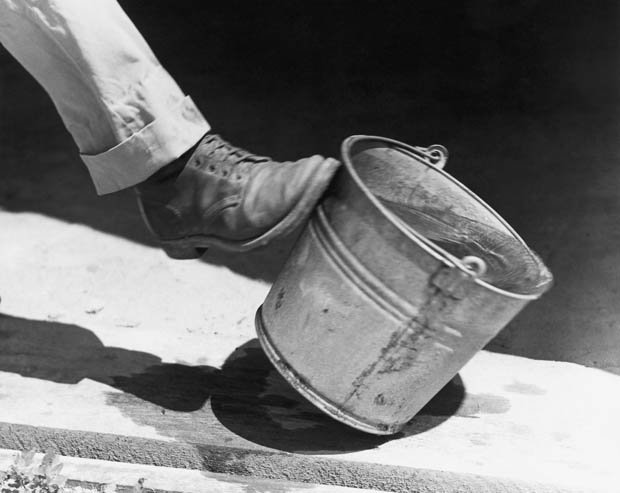
Kick the bucket
Writing a Will is easy and straightforward. I’ve used MHUK’s Free Will service, and I’ve left a gift to them in my Will. In my case, it’s a pecuniary gift, meaning a specific sum of money. But you can also leave items, like cars, books or, or a percentage of your estate, known as a residuary gift (a percentage of what’s left over after costs, like funerals and debts etc). You can have more than one charity in your Will if you want, but I chose MHUK because it’s a charity I care about. Most charities offer a Free Will writing service - so select the cause you care about and contact them. After family and friends are considered, leaving a gift that will help others is important to me. I encourage you to do the same.

If you haven’t made your Will yet, I strongly suggest you do. The peace of mind it brings to you and your loved ones is invaluable.

Photo copyrights:
  • Daisies: FreeImages.com
  • Farm: sunderlands.co.uk
  • Bucket: Dailystar.co.uk
Useful links:
If you liked this, try...


Friday, July 19, 2024

Mental health

Quite a few of my posts cover health, and a few have covered mental health, but I've certainly not talked about depression, for example, as much as I have talked about cancer (links to my mental health related posts below).

Why? Because of stigma, because it is an admission of weakness, because I want to present my 'perfect self' online? Well you know the latter isn't true if you have read my blog in the past.

From about 1998 to 2001 I had clinical depression. It was an awful time, I had two small children and a demanding job and inside I felt completely useless, worthless and kept being told by my other half at the time that 'the problem is there is no problem'. Wow, that was helpful.

I sought help, I got anti depressants. I distinctly remember on day 16 of taking the pills, whilst riding my bike in Cambridge, I suddenly felt like a weight had been lifted from me. The tablets worked! I treated the symptoms, but not the cause. I managed fine - still felt low now and then, but I had two amazing kids and a great job, I kept up with karate, and things were on an even keel.

Around 2007 my marriage started to deteriorate, but by 2012 I was in a very dark place once again, and no drugs, or talking therapy would help. My husband would come home and tell me he was disappointed that his new partner (that's a whole other story) was not being faithful. There's a bit of irony there, no? We were still living together, but I had moved into the tiny spare room onto a put up bed. I contemplated the unbearability of the pain (which I remember as physical, not just mental). But I had two children, who were the one clear perspective in my life at the time. 

To help manage my stress I would go swimming. Just up and down, no thoughts, just moving in the water. It was about the only therapy that helped. I'd been to see Relate on my own early on, and being told that what was being said to me, how my husband treated me was 'mental abuse' was a shock. I didn't realise, didn't recognise, that the person I then loved (unloving takes time) was actually causing me such physical and emotional pain. They put a label on it (abuse). I hadn't wanted to. 

One day when at swimming, I texted my husband that I'd had enough, we had to split - move apart. I couldn't take it any more. When I got home, he said 'I got your message. I thought you'd gone to kill yourself'. That was another mighty shock. Because if that's what he'd thought, why didn't he stop me? That remains a resentment I find hard to forget, though the many other things that were said and done have been comfortably forgotten. Holding on to pain or anger only hurts me, so I don't do it. 

But this story does have a happy ending. No need for detail for the years in between, but I did attend a course by Richard Wilkins called 'Broadband Consciousness'. And that really helped me change my attitude to myself. Richard describes happiness as being like a tide - sometimes it's in, sometimes it's out, it's not a static state of being. For me mental health is like physical health - sometimes it's good, sometimes I get ill, and do what I can to get better, or manage symptoms, so I can lead a fulfilled life and be there for those I love.

But here's the happy ending - because the critical change was that I managed to alter my self-perception. The five days with Richard, Liz and the others gave me the knowledge to understand and challenge that inner voice (which was echo chambering years of undermining). I started to like who I am. 

In 2018 I met my amazing wife and in 2021 we got married. The tide is in.

Liked this? try...

Resources:


Wednesday, May 22, 2024

What a year that was

When I was 13 years old, my father died of a heart attack. Widowed at 44 with two children, my mother found it very difficult to cope and had regular melt downs. I didn’t really know what to do to help her. My 17-year-old brother left home within the year, and I had to become an adult rapidly. I became more introvert at school and depressed for several years. I still miss him today, but I learned to cope and to grieve, over time.

I am writing about this now because trauma, such as the loss of a parent, has a huge mental health impact on children and young adults. In my family we had no warning that my father was going to die so suddenly (if it had happened today, he would have had a much greater chance of survival). But for many families there is notice of bereavement; a terminal diagnosis is not going to truly prepare you, but you are forewarned.

I have spent the last year working with a charity whose services focus on pre-bereavement – that vital support you need to prepare for the death of a parent. Anecdotally and from published research, the impact of a parent’s death on children is life-long. So the better this can be handled, the more open and honest you are, and the more you can help prepare the children for the inevitable, then you can reduce emotional lifetime impact. There is nothing you can do to change the fact that the children will grow up without that parent, but open discussions can be a way to connect and navigate those tough emotions together, and find comfort in planning for the future. 

The charity I worked for was established by Sir Andrew Strauss, a cricketer who lost his wife to a non-smoking lung cancer. If you present at your GP with chest or shoulder pain, or some symptoms that can’t be explained and you say you don’t smoke, lung cancer isn’t often looked for. So, when it is finally diagnosed, it’s often too late as in Andrew’s wife, Ruth’s case. This is the second focus for the charity, to raise awareness and improve early diagnosis which will, quite simply, save more lives.

As ever it’s the people that will leave a lasting impression. The fantastic team I’ve worked with, the dedicated donors, fundraisers and supporters - lending their commercial advice, volunteering or donating, or giving of their personal time outside a celebrity or sports career.

I’ve enjoyed working with the cricket world and the dedicated team at Ruth Strauss Foundation (including the Board and Advisors) and learned about non-smoking lung cancer and pre-bereavement. I’ve expanded my experience in more fundraising areas, and discovered I know a lot more about governance than I realised.

I usually like to add a witty anecdote, but this is a serious subject. Yes, there have been some moments (and I’ve collected a few selfies as well), but mostly it’s been immensely rewarding work.

I do love working in this sector.  I look forward to seeing the charity develop and expand – helping more families, supporting more children who are facing the unthinkable, and saving more lives as diagnosis and care is improved for a cancer whose incidence is increasing rapidly.

So long, and thanks for all the … cricket.  

Useful links

Liked this? Try...

Tuesday, April 23, 2024

Crossing borders

Turtle Dove (C)  
Up until recently, my wife and I lived in Suffolk down a forest track. Our garden was host to deer, rabbit, toads, butterflies, frogs, voles, mice, the odd hedgehog, and snakes. Last year I saw a beautiful three-foot-long grass snake in our pond; the biggest snake I’ve ever seen that wasn’t in captivity.  We had lots of birds in our garden including siskin and, occasionally, Turtle Doves. Whilst doing the ‘Big Garden Birdwatch’ one year I was disappointed that I couldn’t record ‘peacock’. But he was a bit of a nuisance and loved to tease the dogs, standing on the shed roof ‘barking’ at them – seeming to enjoy their inability to reach him. 

When the UK economy decided that extremely high interest rates and impossible mortgages and rents were the way to go, we had no option but to move.  

We had to leave our beloved garden behind and moved ‘over the border’ into Norfolk. We’re still fairly rural, but we can now hear traffic, and neighbours, which we rarely heard before. I’m not saying it was quiet in the forest – the muntjacs barking, the foxes grumbling, the owls and randy hedgehogs created a cacophony some evenings. But then the harsh night sounds would be sprinkled with the song of the nightingale – as sparkling as the stars of the milky way that would lie like a cloud above us.

Long Tailed Tit (C)

So here we are in Norfolk, and we have a new environment to explore. There’s a field next to us and I am sure it will have some stories to share over the coming months. We are building a pond and filling the bird feeder which has already been visited by goldfinch and greenfinch (and a family of mice). Our garden is small in comparison to what we had, but we can make it our own and transform it from a mostly green and brown blank canvas – a new challenge. We also have ducks who visit and have taken on the peacock’s mantle of dog teasing.

As well as new wildlife, we have a new Landlord. He and his father still require access via our house to the field next door and one afternoon I came out to find my landlord’s father (who is nearly 90) in his daughter’s car – stuck. He couldn’t get the automatic out of Park to go through the gates and up to the field. We both tried, and failed, so he decided to go and ask a neighbour for help. In the meantime, I figured out how to get it going, and moved it in from the automatic gates that we had to keep pressing the button for to stop them closing mercilessly on the car. Everyone then arrived at once, my wife, the neighbour and the driver, so we all had tea and a good chat in the kitchen. The East Anglians (I was born in London, it’s not my fault!) discussed local landed gentry and ‘country pursuits’.

My wife drives to Beccles for her work, so it’s not too bad. I have to drive further to see my mother in Southwold (92 and still going strong), but my London commute is definitely a little more challenging. But we are looking forward to our future here, and we need to do more exploring!

Useful links:

Liked this? Try...

Tuesday, January 23, 2024

Long-lived memories


I've posted before about my mum being a costumier - and the odd things she's made over the years. For a while she worked for a publisher producing costumes to go with book tours; these included Raymond Briggs' Snowman, Fungus the Bogeyman, Peter Rabbit and Dilly the Dinosaur to name but a few. She also made a costume for Postman Pat and a buffalo (took two people for that costume) for a carpet company. She made ballet costumes, hats for Paul Revere bar (well, the girls didn't wear much else), and of course multiple theatrical millinery for ballet, opera, muscials (the crown of thorns for Jesus Christ Super Star), a crocodile for Peter Pan (there where wheels underneath so the costume wearer could scuttle about on stage) and something for Mickey Dolenz (who I met), but I can't remember what.

Thanks to the BBC
 She is now 92 and trying to record her days at Stratford with Gielgud and Leigh, and the many other individuals who became famous, is a challenge. Her memory is is - of course - not as good as it was, but certain things will trigger memories. And sometimes those memories will live on and pop up where you least expect. For example, I remembered Dilly the Dinosaur as soon as I saw him - on BBC's QI programme last week. I will admit to watching on playback, not live, because my mother let me know excitedly that she'd seen herself on TV. There was Gyles Brandreth and Sally, with Dilly the Dinosaur (head model).

 
Sally enjoying the company of
Freda the Royal Python
Sally used to sculpt the model for the heads of her creations in clay, then make papier mache casts. Sometimes they'd be reinforced or made of a stuff called samco (which needed setting with acetone). She would work with pearl glue, this weird red moulding material for plaster casting, foam rubber, calico,  buckram... all those materials whose names are familiar to me still. She would also make face masks in latex - for example in the 'Many Faces of Steed' she made a plaster cast of Patrick McNee's face and then created a number of replicas for use in the show (one of whom was my dad). She also made some hats for Madame Tussaud's, including Raquel Welch's white leather stetson and King Henry VIII's jewelled hat. The more I write, the more I remember. 

But back to plaster casting faces - I distinctly remember a camp bed in the kitchen with some chap lying on it, with straws up his nose and a face covered in plaster. Of course I have no idea who it was under there. For many years we also had a plaster cast of Marty Feldman's nose - I can't remember why, but I do remember going to Queens Park Rangers' stadium and meeting him when I was very small - and being just a little bit scared!

At 92 my mum is still going to art classes and life drawing even though she has macular degeneration and her sight is failing. She has multiple health issues of course, but she goes shopping in her motorised buggy, lives independently and if very often out when I call because she is so busy. 

Think of how much is online these days - those photos on social media, pictures and documents scanned and shared. The mountain of information on geneaology sites, and of course the fantastic archives of libraries and press media (a search of the Barnet Press will reveal more for Sally I'm sure). You never know what will pop up where, and whether it will be something to smile about (as with Sally, Gyles and Dilly), or something to make you cringe. 

Liked this? Try...
***Update! I emailed Gyles via his website saying how happy Sally was at seeing that photo, and the gentleman replied wishing her happy birthday and saying 'she's the best'. That's one long-lasting impression you made, Sally!***

Wednesday, December 06, 2023

Tell me your stories

At work we've been talking about making memories special at this time of year. Though not everyone celebrates Christmas, it certainly is a focus on the calendar - even if it's just for increased sales of chocolate and sherry.

My colleague suggested ways of making memories that will last a lifetime, especially given that we work with families where a parent has a terminal cancer. But even when I worked at a dementia charity, making memories - even those that could not be retained due to dementia - was always important.

We had a piano like this in our dining room
The other day someone said 'I don't remember what present I got when I was five, but I do remember ...' and then recounted family experiences. It's true, the 'things' we get at Christmas or birthday or any other celebration are transient, but memories, experiences, they can make lasting impressions even if you don't remember the detail.

I'll share one from my childhood: We had an upright piano in our home and my grandmother played the piano at Christmas. I remember us around the piano and Granny (who died when I was about 10) playing the piano with gusto, dad on his trumpet (I still have it), Charles (granny's partner) on wooden spoon and cardboard box, and mum, my brother and I singing. I have no idea what we sang - whether it was Christmas songs or jazz, but that memory which is more than 50 years old, remains. 

My father died in January 1974 when I was 13. My grandmother and grandfather both passed around Christmas time too, so for many years I associated Christmas time with grief. It took having children of my own to change that. But it took time.

What does Christmas mean to you? What does this time of year, whether it is a religious celebration or simply extra time off work, bring to you and your family? I would love to hear your stories. Please add i comments below.

Liked this? Try...

Resources:


Credits:

Piano photo courtesy of: https://antiquepianoshop.com/ 


Wednesday, November 01, 2023

A sense of justice

If you know me personally, you will probably be aware that I have a strong sense of justice, I am trusting and I believe in the better nature of people. I know I am often disappointed, but I'd rather trust and be let down than spend my life distrusting and being suspicious of everyone. I think it's mentally healthier, even though it means some challenging outcomes at times.

It is good though when, for once, your sense of justice is reinforced by the justice system itself. For a little context, in 2021 I was waiting for the car in front of me to turn right when the road was clear. I had my brakes on, it was a long, clear road. Bam! Boy racer rear-end shunts my car at speed. He's apologetic and actually quite concerned as I was very shocked by the experience at the time.

Picture from the talented Andrew Garrison
Clearly he had been on his phone or just daydreaming (the former most likely). Insurance details swapped, Sheena turns up to support me, his dad appears to get very cross with him. After all he's 18 and just totalled a very nice Corsa. And sent our beloved Beamer to the scrap yard too. Obviously his fault. We took photos of the cars. But... I didn't take pictures of the road, the exact location of the collision and didn't get any witnesses (though some kind folks did stop to enquire how I was). 

The insurance took ages - but we got a decent enough reimbursement on the Beamer - not enough to replace like for like, but we got an old Merc instead. Insurance spent ages settling. And then... we are told it's going to court! 

Boy racer's story is that I pulled out of the junction and stalled in front of him. What?!!! The boy had concocted a lie to reduce blame. And I'm pretty sure it was his dad pushing him, because his dad was very fixated on what impact it would have on the lad's insurance. And I must admit, at 18, it would no doubt be very expensive for him to be insured after an accident like that.

However, his story was a blatant lie. And his insurance company decided to challenge it in court (having listened to and no doubt believed his version of events).  Cut to June 2023 - court case planned. He says he can't attend. Court date coincidentally cancelled. Jump to October 2023, and the case is eventually heard.

We had a lovely chap for our barrister - can't have been far off retirement, very laid back. Their barrister was younger, and meaner! When I was on the witness stand he repeatedly said 'I suggest that you ...' and then recited guff about where my car was and what I was doing. He tried very hard to undermine me and I repeated my position and rebuffed his 'suggestions' (for 'suggestions', read lies) very firmly. He did annoy me - I'm sorry but my sense of justice (or injustice) was surely riled. 

I was travelling from Beccles to home, and it's a straight road. There was no reason for me to be coming out of the side turn. And, thankfully, I had a petrol receipt showing that I had been in Beccles just 20 minutes before the accident.

The judge listened carefully, and when boy racer got on the stand, he turned out to be a pretty good liar. But his story had a few holes in it (like, if he was going 40 mph on a clear road and I came out and stalled in front of him, why did he not take any evasive action?). There was detailed evidence from me, and not so detailed from him - the key difference being mine was true, his was a fabrication. 

In the opposition's summing up, tough barrister said I was 'combative' and that my memory wasn't good (one detail is all I could not recall exactly, whether I was in netural or in gear). Our barrister did a summing up that challenged some of the other side's assertations, but was done in a gentle, rather ineffective way.

Thank goodness for evidence!

The judge summed up the whole proceedings (after a 20 minute recess) and I was hugely impressed! Her summary of the evidence, her referral to my being combative as being emphatic, and examining all the evidence deciding that my story was the more likely, meant that we won the case.

Hurrah! Truth won, justice was done. She didn't refer to the other side as 'liars', merely as remembering the incident differently. I guess that saved her having to start a contempt of court case as well. 

It was not easy, it was not nice. But we bloody won!

If you liked this, try...

Monday, October 16, 2023

When I woke up

We identify as Happy
I’ve written a lot in my blog about different things like cancer, work, travel and music. For a change I am going to talk about who I am, not just what I’ve done. I am in my sixties, and I have two children, two grandchildren (and three step grand-children) and two years ago I married my wife. How I got here is a long story, but in summary, as a child I played with Action Man (not Barbie), I loved to dress up as a pirate (not a princess), and I did meet and marry a man, but he hated my love of hats (not pretty girly ones) – amongst other things. When I had a strange urge to buy a female friend flowers, or had an erotic dream that included women, and then had a crush on another female friend, none of these things indicated to me I might be bisexual. Yeah – slow on the uptake! 

 So now I identify as lesbian. Because all options are open, of course, but I am not intending to veer from this course now I have found it. I was very loath to talk about being gay when I first realised it in my early fifties, but I embrace it now and openly refer to my wife rather than partner in conversation. Let others’ conscious or unconscious bias do as it will, I am happy and confident with who I am – more so now than I have ever been. I guess I was always a lesbian!

 When I say I ‘identify’ – that may set some hackles rising. Why do we need to ‘identify’? Very simple answer - because society wants to put a label on it. We can’t just ‘be’ – we must fit into a slot or a place in others’ perceptions of spectrum, so we label everything from sexuality to neurological ability. I have a stoma, but I don’t want to identify as an ‘ostomate’. I have had cancer, but I don’t want to identify as ‘survivor’. I have friends with life limiting conditions, but they don’t want to identify as ‘disabled’ – that’s not who we are, it’s just part of our lives. But there are some places you do need to identify, even if it’s just so you can use the right toilet (and yes, I do get looks sometimes when I used the one with the picture of a wheelchair on the door). 

 You may consider me ‘woke’ because I am a gay woman, a charity worker, because I support refugees and challenge behaviours like racism and sexism, and that’s fine with me. If you call me ‘woke’, I will take it as a compliment.

Sunday, June 11, 2023

We didn't catch covid


Holiday blog post time! But not all the pictures of scenery and lovely meals (though Corfu has in abundance), but more a reflection on the visit to this amazing island, which is part of Greece, and has just had a change in government.

We arrived (late due to a problem with 'airspace over Slovakia') and the promised rain was nowhere to be seen. The airport was busy and travellers were hot and impatient. Driving to our hotel complex, I was minded that Lord's - where we were staying - was quite different to the Lord's - where I sometimes work.

The first thing I noticed on the drive is that everything was lush and green. The bottlebrush trees were in full colour, the angel's trumpets were huge, and the bouganvilla was in abundance. There were morning glory growing like weeds and the large totem pole cypruss broke up the mountainside horizons like exclamation marks.

We arrived on the Monday, the day after the weekend election on Greece. Having had a left wing government for some time, and the economy becoming more stable (I read), there was a lack of 'trickle down to the people. The electrion result was a Centre Right party, I think, but they have to have another election in June. I have no idea if that's good for Greece,  I'm not goiing to comment on politics where I know so little. But I made observations.

The dustbins - large dumpsters - are placed along roads all over the countryside. Without exception they were overflowing and rubbish was blowing around into the local area - rural and town. Being a hot country there was, of course, a smell, but maybe they did emtpy them often, they just filled up quick. In


two weeks we saw one dust truck going into a private holiday complex (ignoring the huge pile of garbage outside the nearby monastery). In Corfu they have very small sewage pipes, so all paper used in toilets is binned, not flushed. In our accommodation they emptied the bins almost daily, so odour was never an issue.

I had only ever been to Greece twice before (Rhodes and Athens) and both times for work, so my tourist experience of the country and its islands was non-existent. The people of Corfu were very friendly and accommodating, many (everyone we spoke to) could speak English and probably German too. Prices were reasonable (we could eat out well for £10 a head easily), and the rental of our bike and quad was very affordable. Petrol, too, was cheaper at first, though when we got back to GB, it looked like prices had fallen.

When we drove up into the mountains and through the smaller villages, there were still women all wearing black, and there were still cars that looked like they should be scrapped driving around with bits hanging off them. There were tourists on quad bikes and 'twist and go' (like the bike above), and the smartest cars (even the one we saw upside down with an ambulance next to it) were usually hire cars.

The main roads were good (very wiggly due to the landscape), but the side roads were full of potholes. The mountain roads varied - from smooth tarmac to concrete corners and then potholed single track - and all on the same route.

The views from the mountains were amazing. We stopped at one taverna and chatted with the owner whose family had lived in the area for generations.  He told us how the Kaiser built on the next peak, but they all laughed as the water was on his peak. And he told how his grandfather taught him how to find water, so that's why he built his taverna where it was. He had olive groves and served us his own oil, he had vinyards and served us his own wine. He was old, gnarly, and friendly. He didn't like the government (which I wasn't sure) and we had similar opinions of the lack of politicans' understanding of the everyday life of people.

The beaches were clean, and even when the one night of storms brought in all the seaweed, it didn't impede our delight in laying on the hot sand and swimming in the shallow, clear sea. The jellyfish arrived in the second week, but we managed to avoid them.

I had no problems travelling or swimming with my stoma, which for other ostomates may be reassuring. I didn't even get heat rash around the seal, thankfully.  We flew there and back on an Irish airline and I really don't like them. The staff are fine, but you have to pay even to fart, it seems. Thank goodness they didn't charge me extra for having a stoma!

Two weeks is a long holiday for me. The only other time I've been away than long was to Australia in 2018. It was a lovely two weeks. We both relaxed, enjoyed the island and enjoyed eachother's company and reading (audio) some great books.

And, we didn't catch covid.

Useful links:

Liked this? Try


Saturday, May 20, 2023

From May to June

.

May is nearly over, and I haven't blogged in a while. It doesn't mean nothing is happening, it means I've been busy. Busy playing with Hannah and Sheena at the local beer festival (at the Rumburgh Buck), busy working and preparing for our biggest event of the year (#RedforRuth), and busy gardening!

Of all the busy things I do, gardening is the most calming. I have a lovely  polytunnel set up in my little veg area, and my greenhouse is full of young plants. I've claimed another bit of garden for another veg bed, and have had to put bamboo canes up to deter the plant nibbling peacock who visits regularly.

Percy peacock
Sheena loves cabbages so I am growing them in the polytunnel and in the veg bed under netting. We have so many beautiful butterflies (including white admiral whose caterpillars feed on the wild honeysuckle) and many of them rather fancy my brassicas! (And the older geration might just be saying 'Ooooh matron!' to themselves).

Watering is a very relaxing activity, as is deadheading. Weeding, not so much, but still necessary. We have one weed in our garden that just appeared this year in the lawn. The good folk of the Gardeners Question Time Facebook page assure me it is 'miner's lettuce' - an edible plant. But I won't be putting it on my salad - not with three dogs in the garden. I may try growing some elsewhere just for tasting purposes though.

My next big gardening project is reclaiming the borders at the dog training centre and putting in some plants that will thrive (given that dogs are everywhere, the border is in heavy shade, and it's not regularly watered). 

Meanwhile, I will continue gardening and feeding the birds. We have a cuckoo nearby, regularly hear the nightingale, and have blackcap, wrens and robins. The feeder is visited by greater spotted woodpecker, marsh, great, long and blue tits, goldfinch and chaffinch. And under the feeder - a couple of stock doves, wood pigeons, dunnock and Percy. 

I'm hoping we have lots of fresh produce from my efforts this, year. I will no doubt post pictures of cabbages and tomatoes in due course.

Liked this? Try...

Friday, March 17, 2023

Growing around grief

Working in the charity sector over the years I have met so many amazing people, from the relatives of loved ones with Alzheimer’s, to survivors of serious accidents - and the families of those who did not survive.  

Dealing with grief at work is very different to dealing with it in your personal life – and I mean both for the bereaved, and for the professional.  In the charity sector, gifts ‘in memory’ of a loved one are hugely important; they allow the bereaved to celebrate a life passed, and also to support a cause close to their heart in that process. It could be anything from Air ambulances to Zoos – there’s usually a relevance to the deceased.

Supporting a charity gives the family the opportunity to share their memories, thoughts and wishes, often through dedicated ‘in memory’ pages on a website. This little bit of immortality can mean a lot to a family and help them process their grief.

Many years ago I learned about Elizabeth Kubler Ross’s Stages of Grief, and later on researched more about her and her extraordinary perspective on life after death.  Her ‘model’ of grief is well known and very logical, but there are other models, such as Tonkin’s ‘growing around’ grief – grief does not really diminish over time, we just grow around it.  There are other models, and Freud had plenty to say on grief too, but models aside, grief is hugely personal.

I lost my father when I was 13 years old. I was very young; I think you could probably equate it to 10 or 11, given the maturity of young people today. My brother’s reaction was to protect me, initially, and then – as my mother disappeared into her grief – to leave home. My reaction? I can’t accurately recall, but I think depression was certainly a big part of it.

Although my father died more than 50 years ago, I still grieve. On the train home from London the other day, I talked to him – told him all about my day (silently, I didn’t need extra space on the train). I clearly saw him in my mind’s eye, sitting in the empty seat opposite me, and he reacted (in my imagination) how I remembered he would have done. 

I didn’t go to my father’s funeral – to the church or the burial. Maybe it would have helped me to have gone, I don’t know, but now at any funeral (even someone I don't really know) I am a useless emotional heap. That may be a legacy of unresolved grief, but it’s often embarrassing. Yes, I have grown around my grief – I don’t wear it daily, but it is easy for me to slip into sadness when I think of all the years I never had with my father, how he never knew me as an adult, or heard me sing (though he may well have hated my music choices), or met his grandchildren. But then again, I never saw him grow old, either.

Today someone said to me that grief is ‘love with nowhere to go’. I found that very moving, but also hope that as we grow around grief, our love is not lost, but finds new avenues, and stays true for those we have loved and lost.

Useful links:

Related blog posts

Friday, February 03, 2023

62 - not out

My father loved cricket, he played for Sudbury (who knows why as we lived in Barnet) and listened to matches avidly (and probably watched them when we did get a television). I remember names like Fred Trueman and Basil D'oliviera and seeing my father in his whites. I also enjoyed the 'Botham years'. Now this was a long time ago, and though I've only been to one cricket match since my father played, it's a game that sits comfortably in my memories. 


So this January, having finished my role at MDUK in December, I had time to 'rest'. But, in fact, ended up doing plenty including having my kidney stone blasted and the evil stent finally removed. A good time to have my surgery and take a bit of a rest as my new job started on 1st February. 

 New job - new things to learn. I have joined a charity in another area that is new to me - and once again I am moved and inspired by the work they do. It's another maternity cover role which I hugely enjoy, I can lend my experience and knowledge and support the charity whilst their Head of Fundraising is on leave. I'm also really glad that we will work together for a couple of months before she goes on leave so that we can develop the plans for the year ahead together.

But here's why I talked about cricket in this post. The charity is the Ruth Strauss Foundation - and though I didn't know much about the charity beforehand, I had actually heard of Sir Andrew Strauss, the England cricketer. His wife Ruth passed from a non-smoking related lung cancer, leaving two young children. But before she died, she and Andrew planned and launched the charity, the Foundation, to provide support for families where a parent has a terminal diagnosis, and to fund more research into a cancer that is increasing in prevalence.

 I've been reading the research and 'mission' information about the charity and didn't realise that so many children lose a parent each year, nor that non-smoking related lung cancer is the eighth most common cause of cancer-related death. Although smoking is still a huge cause of lung cancer, I wonder about vaping (we have no idea what impact that will have as it's such a 'new' habit) and, of course, our deterioration in air quality as we continue to pollute the planet.

So this charity speaks to me as a parent, a grandparent, someone who has had cancer and as a conservationist. 

I will blog more as I learn more (it's only day three!), but in the meantime, on my very first day I was cheeky enough to ask for a selfie from the man himself, who just happened to pop into the ECB and made a special visit to see the team who were there that day.

Useful links

Liked this? Try...

Friday, December 23, 2022

Family archives


I have some interesting documents from various family connections - such as an acceptance of US Citizenship for Edward Keller (dated 1876) and a rather unpleasant letter about my grandmother's divorce from Leslie Hemsworth (who it seemed also ended up in the USA). I have materials from my step-grandmother too, and of course the full Sheppard Family Histories (but they are staying safe with me and will remain with my family).


The Keller family were my grandmother's second husband's, but he was alienated from his family (previous wife/children) so I have no idea what happened to them or whether they would even be interested in these old documents.

Sepia photograph of Peter Ricu `804

I have looked up to see if there are any groups researching Family History for these families, but unless I wanted to sign up and pay for a service I don't need, there doesn't seem to be an easy way to share these interesting snippets of history. This photo, for example, is 'Cousin Peter Ricu' dated 1804. Who was he? In smart military uniform, isn't he.

I don't want to destroy these old documents, but then again, what do I do with them? I can keep them until I shuffle off, but then someone else will just throw them away.

If you have any ideas about what to do with these documents I'd appreciate it (add in comments). I don't want to throw away those intriguing insights into social history.

Liked this? Try...

(Sorry the wrap around the photos wasn't working today!)


Thursday, December 22, 2022

Still learning

At the end of 2021 I took a maternity cover contract at Muscular Dystrophy UK (MDUK), as Head of Individual Giving. When I joined, I knew nothing about muscular dystrophy.

Muscular dystrophy (MD), for starters, is around 60 different conditions, all of them muscle-wasting – that means the muscles deteriorate over time. To quote the NHS:

“In most cases, muscular dystrophy runs in families. It usually develops after inheriting a faulty gene from one or both parents. MD is caused by mutations (alterations) in the genes responsible for healthy muscle structure and function.

Some conditions, like Duchenne, are life-limiting. The heart is a muscle too.

Although categorised as a ‘rare disease’, muscular dystrophy affects around 110,000 people in the UK – which by the time you include their families, friends, and support networks, impacts thousands more. I do have a friend with a muscular dystrophy, I just never realised that’s what it was.

Several things will stay with me from my year with MDUK– one of which is the fact that you can prevent a disease. Spinal muscular atrophy (SMA) is a group of hereditary diseases that progressively destroys motor neurons.” However, new-born screening can identify whether the baby has the variant gene and gene therapy can be applied early on (way before any physical indications of the condition). With gene therapy, the child can grow up without the life-limiting disease. That to me is mind blowing!

The second is that when a new, disease modifying drug is identified, even after positive clinical trials, it may not be adopted by NICE. MDUK (and many other health-related charities) work hard to ensure access to treatments for those they benefit – and it’s not always a clear-cut case.  I know of two examples of children who have had access to treatment (that isn’t necessarily going to be there in future for others) that has dramatically improved their quality of life. One example is Translarna. I’ll be watching the MDUK website in January to see if NICE have agreed to make it accessible to children newly diagnosed with Duchenne.

The third is the fantastic Changing Places project. I had no idea such toilets existed and the difference they make for families, individuals and carers who just want a simple day out or even just a trip to the supermarket. Now I notice them when I see them, and smile. 

One thing I learned was about myself - and that even though I try very hard to be woke (yeah, it can be an ambition!), I can be guilty of micro-aggressions. I wrote a separate post about this.

I spent the year with amazing colleagues, some with a muscle wasting condition, some with family members with a condition.  And I had the privilege of meeting the people who support, and are supported by, the charity. I learned so much more by just speaking or working with people who have a muscular dystrophy.

Goodbye MDUK, and all the best for 2023 and on. 

Now, on for the next adventure and set of learnings. I do love the third sector, it is always going to surprise, engage and teach me new things.

Liked this? Try...

Useful links

Friday, November 18, 2022

Fundraising strategies

I have been working in fundraising a long time, and I know how to develop strategies, and how to deliver them. But when I talk to others, I often focus too much on the delivery and not enough on the development. So I decided to articulate my thoughts in a blog post. As Simon Sinek says, 'Start with the Why'

Firstly, why am I doing this post? Because I know that sharing my strategic knowledge and expertise helps others in the sector, and - in the long run - it will help me. Articulating what I do instinctively is not always easy in an interview situation, for example. 

Simplified example 'synergy' model (C) CT-S
One of the things I have noticed with strategy development in some charities is that there can be a 'missing link' between operational delivery and fundraising strategy. By that, I mean that the financial need hasn't been linked closely to the beneficial outcome. That sounds crazy, but sometimes a fundraising target is set as a percentage increase, rather than articulated as "£x would enable us to deliver...". 


There is nothing more motivational to fundraisers, and indeed donors, than the impact of the charity's work. 

I start with the ‘Why’. This enables me to identify the case for support before I even begin looking at the strategy. Once you have the Why clearly articulated, strategy development can begin. 

My first action is then an audit: what has already been done, how has it performed, what is happening in the sector? This gives context to the plans that will evolve from creating clear objectives (the What, defined by the Why) and provide insight into which tactics ('How') you will consider putting into the plan to deliver your objectives.

Objectives can be SMART (and they can be stretch goals - 'wouldn't it be amazing if...'), but they also need to be agile . In these challenging times when we just don't know what will happen (pandemics, war, economic crises), having objectives that can be flexed is an advantage. Mixing your strategic approaches (see illustration) is also a wise move in uncertain times. 

Strategic approaches, from a presentation by
Cameron Cummings of JAA Media

Before you get to your 'How' (tactics you will use to deliver your objectives), getting internal buy-in and the collaboration - or even just understanding - of peers within the charity is also vital in ensuring success. This is the internal 'Who', though you will also use Who to look at audiences.

If your senior management team understands your strategy and how it will impact their teams (whether fundraising or not), then you are more likely to achieve the outcomes you intend. It will also help as you plan the resources you need to deliver, as it is likely that you will need support from others that you do not directly line manage. 

Make sure your tactics have a budget and a schedule ('When'). And 'When' can mean  a longer-term ROI or lifetime value, as well as a short-term income target. 

I developed the fundraising strategy template I use from the Chartered Institute of Fundraising's Diploma training, but I have adapted it considerably according to cause and income stream. There's some resources below, but do talk to your peers in other charities too.

Resources


Liked this? Try...