Showing posts with label Family. Show all posts

Friday, November 20, 2026

A short poem

 Ageing
 

Youth slips

Not just with your aging

But as the generation above

Your parents, parents of your friends

Slip from your world

And then from this world.

When your friends

No longer close

But bright in your memories

Also take that path

Unwillingly, early

Or just surprisingly.


Your wisdom’s context

Unclear now,

As family

Small and vulnerable

Are now tall, strong

And parents themselves.

Your hands, your back

Your lungs, your eyes

Betray you

And remind you

That years accumulate

At a price.


As joy shifts

From excess to content

Keep close each moment

That you are gifted

And never forget

To love.


Monday, June 15, 2026

Last journey

Front seat, his seat.

Beside the one he adored.

Never had his head out the window, 

Not that common.

On his bed, cold, quiet.

He’ll come back

Onyx wrapped, ashes.

Always with us,

In our hearts and memories.


RIP Chizel. Gawd I miss that little dog!


Wednesday, June 03, 2026

Happy birthday Philip David Sheppard

Why a blog post to wish my brother happy birthday? Why not! I don't know where he lives, his email or his phone number, but I do want to wish him well on his 70th birthday.

Oddly he's appeared in a couple of my dreams recently, and I remember waking up thinking how nice it was to see him again. 

Happy birthday Phil, I do hope life is treating you well. Sending love from the family, which includes nephew (in Australia), your niece (in Cambridgeshire), your great niece (Bella) and great nephew (River).

And of course from me, your sister, and your sister-in-law Sheena. It might make you smile to know that her son calls me 'dad'. I hope so.

Happy birthday bro.

#philipdavidsheppard #philipdwightsheppard


Tuesday, December 30, 2025

Creative change of direction

For most of my life, being a musician has been a big part of who I am. But as arthritis has robbed me of the ability to just pick up a guitar or any stringed instrument and play; the frustration and loss hurts. If I go to a folk club and sing a couple of unaccompanied songs, it just reminds me again of what I used to do, but now can't.

I can still play the bass as that doesn't require my fingers to curl and make chord shapes (though I play a lot slower now), but my creativity is stymied. I find that watching or playing music brings up a frustration, and a sense of loss. I have a clever electric instrument that mimics a guitar and I spend some time playing it - and then stop when I can't do what I really want, because of my own limitations as well as it's technical functionality.

And the other day I dug through an old hard drive and found songs and music I'd written ages ago that I had forgotten about. And I'm sad again that I can't just play or write or even have the drive to do so now because of the sadness it causes. 

This sounds like a pity party, but it's not - it's about why someone who was so wrapped up in music is not the same today, and what I'm doing instead. I am still a creative person, just not the musician I used to be. I will still play music with my friends, and do my best - but I still know deep down I used to be able to do so much better. So - instead of mulling on what I can't do, let's focus on the good stuff!

I am developing my other creative skills and started to make videos for my old songs using AI to help, but still keeping the themes my own. I am also moving my creativity into other areas such as making things out of wood. I'm very amateur, and the effects so far are 'rustic', but I do enjoy working with wood and want to learn  more. Again my arthritis does limit me, but it's easier than playing an instrument.

I write this blog still, but my poetry and stories have fallen by the wayside a little. I'm hoping that when I eventually get to retire I'll be able to do all these things I want to do, but that's more about prioritising my free time, which still seems to be at a premium when I want to do the gardening, do my wood projects, go birdwatching, do more photography, keep working full time (including some pretty long commutes) and, of course, spend time with my wife and relaxing.

This is the first video I made using Clipchamp and AI - I think I got better the more I made:

Beach Busker

You can find more of my songs and videos on my Youtube channel. 

Useful resources:

Liked this? Try...

Wednesday, December 03, 2025

A Long(leat) day

A long day, and a long blog post.  

Longleat House
A coach trip with mother - planned to visit the winter light show at Longleat! A coach full - and I was probably the youngest on board. We set off from Lowestoft, and picked Sally up at Southwold, and then began the slow, gentle journey to our hotel in Swindon.

Sally had a rough night, but we had a lovely breakfast and set off with the coach to Longleat. One of my distant relatives married into the Thynne family, so I'm distantly related to the Marquis - and after a tour of the house (with a borrowed wheelchair) we found the family tree and I found my relative (see pic). The rooms in Longleat House are amazing - and I took lots of photos of the fabulous ceilings. If I can dig out our family tree, I can show how I'm related (I will update the Sheppard Family History blog at some point). 

Tired after the tour, I tried pushing Sally on her wheeler, but it wasn't really suitable as a wheelchair, so she slowly made it back to the coach at around 1.15. Climbing into the coach, which has very high steps, wasn't easy, and on the final step into the seating area her legs gave way and she collapsed downward. I and a helpful coach guest tried to lift her but the angle and dead weight made it impossible. She slid down and wedged her leg under the dashboard. This leg, by the way, is heavily bandaged as she has an ulcer.

Thynne Family Tree

At 1.30 the Longleat Paramedic (we'll call him Joe) arrived, along with some other Longleat staff. The coach driver (we'll call him Mike) stayed with us as Joe assessed the situation and amazingly managed to manouevre Sally into the jump seat at the front. Sally was distraught that we were going to delay the coach from going round the safari park - but there was nothing to be done. We couldn't move her as she couldn't take her own weight on her legs, and we couldn't drive off with her in an unsafe seat.

Joe called for an ambulance - but we were told the waiting time was unknown and nothing was available. Mike sent the coach trip off around Longleat and they enjoyed the other attractions and, as darkness fell, the amazing light exhibition (which was also on the tour itinerary). Sally and I, with Mike, and Joe, sat on the coach - waiting. Joe phoned the ambulance a couple of times, but by 6pm there was still no sign or indication of any arrival. Having rested though in the seat, and with Joe and other Longleat staff's help, we managed to get Sally from the coach and into a wheelchair and she was taken to the First Aid room at Longleat where we were looked after by Joe and the duty manager, (we'll call her Hannah) in charge of visitors (she had a posh title, but I can't remember it) and another Joe. An eventual plan was hatched by Hannah that we could call a special taxi and get Sally to hospital that way. Taxi arrived promptly and with Joe's help, we got her in. As we wheeled from First Aid to the taxi pick up, Hannah and Joe 2 asked if we'd eaten (not since breakfast) and Joe 2 dashed off and returned with two sets of sandwiches, crisps and bottled water for us. I cannot fault how marvellously Longleat staff looked after us. They even arranged for the coach tour to come back so they could complete their Safari.

We arrived at the hospital at 8pm and after a speedy triage Sally was put on a trolly and we joined  corridor care. Thankfully we were also moved into a bay reasonably quickly. Sally had her bloods taken (after several attempts), had an ECG and was monitored and observed regularly and the nurses were caring and helpful but rushed off their feet. We saw our first doctor at 12.45. At 4.20am the doctor came and told us that Sally had actually had a mild heart attack. We were all surprised as there were no signs at all. Apparently this is typical as women present very differently to men with heart problems. This doctor had her suspicions with the slightly abnormal ECG and some raised markers in her blood. Another doctor with twirly moustaches appeared and he and our first doctor did an echo scan of the heart which I watched. Good results, no signs of fluid around the heart, and no major issues - in fact it didn't really look like she had actually had a heart attack, but it was confirmed later that she had. I thought that was a good time to update Sheena, and it was lovely to be able to message with her on my phone.

I had managed 10 minutes kip in the chair by now and was flagging, Sally was nodding off every now and then but constantly woken by the automatic blood pressure cuff and other regular observations. At one point she had a blood pressure crash and went onto intravenous fluids and had her legs elevated - it felt critical, but she rallied. It was turning into a very long night. We were still in the Emergency Department High Care cubicle, but she was moved to the Medical Assessment Ward. By 9am we decided I should go back to the hotel and collect her things, and - on Sheena's insistence - get some rest. I took a taxi to the station, a two stop train ride (it was 10am but with the weird light and my lack of sleep it felt like 4pm) and then a taxi back to the hotel, I took a shower, changed my stoma bag and crashed for two or three hours. Sheena meanwhile drove from Suffolk to Swindon, and we then went back to the hotel for around 4.30pm. 

It was a 4 1/2 hour drive to Swindon from home, and then another 45 minutes to the hospital - and the queues of traffic going into Bath were awful, but luckily we cut off beforehand to get to the hospital. We stayed with Sally and had updates from the nursing staff and one of the doctors and eventually left her to return to the hotel. We arrived in time for supper and Mike the coach driver (who I had kept up to date by text) and the others were all asking after Sally. Of course as soon as we arrived, one of the other coach passengers said 'Hello Sheena...' 

The following day (Sunday) we went back to the hospital and spent more time with Sally. They weren't so worried about her heart, or the fluid on her lungs (new one), but the ulcer on her leg was worse so she was on intravenous antibiotics. We spent as much time as we could, had lunch in the hospital, and then set off after saying our goodbyes. The M4 was shut from Bath to Swindon, and our journey home took nearly 6 hours.

The doctors say Sally needs to have treatment for her leg for at least two weeks - probably intravenous but possibly oral, if she gets better enough. We are going to see if we can get her moved to our local hospital, but these things all take time. Message me for updates, or message Sally and cheer her up!

Friday, July 18, 2025

Madeira part one

We went on holiday! Two whole weeks on an island we’d never visited, with adventure waiting around every corner.

The mountains in the north
Madeira’s landscape is extraordinary—no wonder the Portuguese were so taken with it, and why it changed hands several times over the last four hundred years. Although it originally seemed uninhabitable to early explorers, the ingenuity of Portuguese engineers (sadly using slave labour) led to the construction of remarkable channels that carry water from the lush north to the dry south. These are called levadas, and they’re one of the features that make Madeira such a wonderful destination for walkers.
Levada PR 6.3

Our impression was that the north resembled New Zealand—high, tree-covered volcanic mountains draped in a persistent veil of cloud. The south, by contrast, felt more like a Mediterranean island: sunny and drier (though we were in the Atlantic ocean). The island isn’t large—about 35 miles east to west and 13 miles deep—so as long as you have a car and a head for heights, getting around is easy. Although Portuguese, Madeira is geographically closer to Africa than to mainland Europe.

The more recent engineering that impressed us was the tunnels! The old roads, which wound around mountains and clung precariously to crumbling rock faces, have been replaced by sleek tunnels that punch straight through the mountains. The new coast roads (head west from the airport, along the coast, and then north) probably has as much tarmac underground as it does above.

One thing we learned quickly was that if the weather in the north (where we were staying) wasn’t great, we could simply head south. We drove through one 3.1 km tunnel in the middle of the island, and as soon as we popped out the other side, the clouds were behind us and brilliant sunshine lit up the landscape.

The hotel was nice—though a bit Miss Havisham (she was four-star in the ’80s, a little faded now). But the staff were lovely, and the breakfast was a great fuel-up for the day’s adventuring. Our favourite places were the levadas (though we only walked one), Calheta beach, Fanal forest, and the local Brasa restaurant (which served amazing beef skewers).

The 'witch tree' Fanal forest
Like Iceland, Madeira has very little native mammal fauna. I managed to spot one of the native trocaz pigeons—no photo, sadly. The endemic sparrowhawks had a nest near our balcony, so I did get some good shots of them. The other prolific wildlife was the little lizards, with the males sporting a gorgeous green. Although most scattered when people approached, I found one sunny spot where a gang was sunbathing—and I even got to hand-feed them.

The island is also famous for its flowers, and they were out in abundance during our visit. The hills were draped in wild agapanthus, their huge white and purple heads nodding in the breeze, and the hydrangeas were enormous! Much of what we saw is best illustrated rather than described, but I’ll highlight a couple of our adventures in more detail in future posts.

Useful links:

Liked this? Try...
All photos (C) Carolyn Tyrrell-Sheppard


Thursday, February 27, 2025

Excuse me, are you dead?

A few years ago, I applied for credit and was refused. I contacted  my bank, Santander who told me I was dead. Ahem... I hadn't noticed! Very remiss of me? No, they checked I really was alive, apologised and made amends (£200), but for two weeks I was dead according to the financial world. Not dead for 'tax purposes' as the dodgy Arthur Daly once recommended.

Check out the old 1932 cartoons! 
As someone who sends out those letters and emails asking for money for a good cause (not worked for a bad one yet), I am very sensitive to the hurt that can be caused to loved ones by sending letters out to people who are deceased. We take every precaution! If we are notified by a relative, or by returned post, we update the record and they are not mailed again. We even use external agencies to check for notification of death using precise matching of name and address. We really don't want to send a letter to a dead person, firstly so as not to upset the remaining family, and secondly because it is a waste of charity resources.

We recently sent out a mailing and did a 'screen' to remove those who are no longer living. The printer sent us back the records to remove as a result of the screening. Interestingly enough, five of them still had live direct debits with us. And then, one updated their address. Hmm... methinks that's pretty hard to do if you are dead!

I asked the question on a fundraising chat board and, anonymity promised, I discovered that we were not the only ones being told that our living donors were dead:

"I once had to remove the phone from one of my team who was busily letting a donor know they were dead and therefore she couldn't help them"

"We've just had a supporter restart a Direct Debit who was marked deceased by BACS last year"

"Have had a “deceased” donor on the phone asking why they didn’t get a thank you letter for a donation"

Now the first comment might make you smile, but at the heart of this is the people who have lost someone, who we don't want to mail or contact because of sensitivity to the family. Sometimes a direct debit may continue even with a deceased notification because it's a joint account, and the remaining individual wants to continue supporting the charity. But it goes to show, you can be as careful as you like, but it can be a very hard one to negotiate and make totally pain free. 

In closing, I would just like to apologise to every family who has received mail to a dearly departed, charities really do try their best!

Useful links (possibly!)

Liked this? Try...

Picture source: not sure, but it's from an old Silly Symphonies animation.

Monday, February 24, 2025

Iceland part two

In November 2024 the volcano south of the airport decided to flex its magma and attempt to wipe out a town, destroy a few roads and seriously threaten the Blue Lagoon and the nearest power plant. It was spectacular! Not world-impacting like the 2010 eruption of E17 (which is on the glacier we later visited) - but still impressive. Would we see lava? Well, not 'in the flesh' as it were. The volcano was rumbly, but not performing for visitors when we were in Iceland.

Human made lava
Day two: doing the cultural bit. We had our breakfast and headed into Reykjavik, having decided that the Lava show and Northern Lights exhibition were the two places we wanted to head to. Deciding on the Norther Lights first (we hadn't seen them yet, as it was so cloudy), we rocked up to find it shut! And a sign on the door saying they'd moved - phew! We headed to the new venue but arrived at the Lava show venue first, with just 10 minutes before the 12 o'clock show. Lava first! 

When a couple watched the lava flow past their house, they were awestruck. They wanted us all to share in the wonder, but without the evacuations, ruined roads and danger to life. So they built this show with a massive burner that melts the black laval sands and turns them back into hot lava. It was mesmerising! The presenter, Joanna, gave a really interesting talk on the geology of Iceland, how the lava is released, types of lava flow (using two cute but forgotten Hawaiian terms), and then demonstrated how it would buckle, turn into glass, and retain heat even when the surface was cold. She made lava strands (witches hair) and - as the lava had already been melted once and was 'gas free' - the result was like black glass. 

Northern lights watching

After a very enjoyable 'demonstration' we went next door to the Northern Lights exhibition. You might wonder how they can showcase a natural phenomenon, but they did a great job. There were really clear explanations of what causes them, where they happen, the different colours (different heights in the atmosphere) and an amazing photography display in an almost cinema-sized room where you could sit, or even lie down and watch the Northern lights in all their glory. If we didn't see them in real life, this would be the next best thing! The tour finished with steel swivel pod chairs and a VR headset that worked amazingly. We got our Northern Lights fix!


Driving out of Reykjavik we headed to the Harper Hall (an amazing building) but as we could not park anywhere, we headed out by following the coast road. It didn't take long to reach a lighthouse and a nature reserve. We could have walked to the lighthouse along a little causeway, but the tide was coming in and we didn't fancy an afternoon being buffeted on the lighthouse island, waiting for the tide to go out again. Instead we started to walk along the sea wall (looking down on black sand) and we saw our first proper wildlife: King Eider ducks, purple sandpiper (a first for me) and a speeding hawk that must have ben a gyr falcon, although it was too speedy for a confirmed ID. We had a lovely walk through the nature reserve up to a large pond with Whooper swans, pink footed geese and a host of other ducks. The wind was whistling round us, and it was overcast, but the fresh cold air was exhilarating. 

On our way back we stopped for a late lunch at a small restaurant and we had raw beef and cooked cheese. I say 'we', but I ate most of it.

Liked this? Try...

Useful links:


All photos (C) Carolyn Sheppard

Tuesday, February 18, 2025

Iceland part 1

Oh, I've been a lax blogger! But Sheena and I have been busy, for sure. Our latest adventure was a trip to Iceland in February. 

Day one: we had stayed overnight near the airport as the flight was at silly o'clock. All went smoothly and we landed in Iceland at just after 9am local time (which was the same as UK time). It was cold, but not snowy as I had imagined. There was old snow on the ground, muddied and slushed, but the vista was of rocky, snow-highlighted terrain rather than the white-out I had anticipated. Warmer than usual for the time of year perhaps? But it was chilly, and the wind was biting!

Stripy Icelandic Mountains

We eventually found our hotel after asking directions (sent to the wrong place, with same road name), and using an insufficiently detailed map until at last our sat nav started to work. On the way up the main road from Keflavik to Reykjavik we passed the biggest fish processing plant I've ever seen - it must have been about a kilometre long! But then fishing is a mainstay of their economy, so not surprising.

As soon as I walked in I realised it was the same hotel that I had stayed in during my previous visit 8 or so years previously, even though I hadn't made the booking this time. Picture hunting lodge (entrance) crossed with motel style parking and rooms, and a sports bar with video screen (showing flickering firelight most of the time). The ground was icy - and there were dirty piles of snow in the corners of the parking area. Across the road we had a lovely view of the KFC (no, we didn't eat there once). Our room upstairs looked out across the town (Mosfellsbaer) to mountains that were striped with snow that snuggled away from the wind in the channels made from years of meltwater scoured paths. It was picturesque, but somewhat bleak without the mantle of complete snow cover. It was a nice room, a very comfy bed, and pleasant staff. The breakfast was a help-yourself buffet which enabled us to fill up heartily for the day ahead.

We spent our first day relaxing and went to the local supermarket to stock up on some sandwich

Our hats kept us warm and made others smile!

components. We visited the bar in the evening and chatted with some other residents in the lounge, plus an Icelandic storyteller. Now, he probably didn't picture himself as a storyteller, but we all recognised him as such. He started off as a fisherman, working out of Dubai. He had an apartment in Dubai. He was the son of the family who owned the massive fish processing factory. His father was dead, his mother was an alcoholic. He inherited the family business and was a fisherman. I have never seen a fisherman with such soft, small hands! But who knows, maybe he was the sonar operator or something. He had an apartment in Iceland, no, an apartment and a house, or was it now two houses? He was upset that girls he met wouldn't wait for him for three months every time he went to sea. He loved being at sea, even though as a millionaire he didn't need to work. He also loved to talk, but seemed to be following in his mother's footsteps. Our host came in and spoke something rapid and harsh in Icelandic. He sloped back to the main bar, like a contrite child.  

It was good to exchange pleasantries with the other guests, and share what we had done or what we were going to do. Our first day was relaxing and we slept well after our very early start. No Northern lights out the window, but rain! 

In part two - LAVA!

Useful links:

Liked this? Try...

All Photos (C) Carolyn Tyrrell-Sheppard

Thursday, October 24, 2024

An unusual childhood

I've written a bit before about the different childhood I had, but not in much detail (see Liked this? below). I could probably write a book, but instead here's a short poem. One thing my mother talks a lot about (she's 92 now) is regret. She can't undo the past, and there were so many good things, different things, that I learned that I would never have done without that childhood. I know how fabric should hang, and whether it is right for the period, for example.  The world of CGI has changed costumery for the cinema, certainly, but theatre still relies on a lot of craft. My mother was certainly a very talented craftsperson.

Growing up

Samco, acetone, buckram, calico

Pearl glue, foam rubber, plaster, fur fabric

Mother much too busy, for the small child


Giant moth, Sontaran, Mutant, Cyberman*

Pepper pot, Cuckoo, giant flies, tutus

Comedians and actors, smile at the small child.


Plum pudding, ballet masks, feather boas, jock straps

David Wood, Gyles of course, Raymond Briggs, dinosaurs

Directors and dancers, not noticing the small child


Peter Rabbit, Whatamess, Gladiator, Fungus

Marty Feldman, Mickey Dolenz, Morecambe and Wise

Placido bumped into, by the small child


Coliseum, D’Oyly Carte, Drury Lane and Shaftesbury

Rooms of feathers, rooms of foam, rooms of fabric off the loom

A curious playground, for the small child


Hats, masks, monsters, jewellery, designs

Costumes, sequins, Jesus Christ’s crown

All distractions for the young child


Working on Christmas day, working on holidays

Pins and needles in the chair arm; pricked fingers

A normal day for the wheezing child


Clay, there was a lot of clay! The picture above shows Gyles and my mother - he is posing for the Dilly the Dinosaur costume she made him for a book publisher's promotional tour.

Liked this? Try...

References:

  • Dr Who monsters *Sally made the Minoptera, the Solonians, and parts of the Sontarans, the Gell Guards, and bits of Cybermen and other costumes/props.
  • Placido Domingo I bumped into him at the Royal Opera House, when he was in Girl of the Golden West
Photo credit: BBC TV. 

Tuesday, August 27, 2024

Where there’s a Will…

Pushing up the daisies
Writing a Will isn’t a one-time event—it's something you'll likely do multiple times throughout your life, for different reasons. The first time I wrote a Will was when my husband and I bought our first home. Although I’m no longer a property owner, I still have possessions and, more importantly, specific wishes about what happens when I die.

Major life events like buying a house or starting a family are natural times to write or update a Will. I did just that when I had children. Later, when I left my home and began a new chapter on my own, I updated my Will again. Then, life took another turn—happily, I remarried. But did you know that getting married can automatically invalidate a previous Will? I didn’t, so yes, I had to draft yet another one.

The truth is, you don’t need to be old or unwell to make a Will. You just need to be an adult with a clear idea of how you want your affairs handled after you're gone.

Bought the farm
I used to assume that when I died, everything would automatically go to my spouse. [But for those who aren’t married or in a civil partnership, that’s not the case for your partner.] And if you’re separated but not yet divorced, you might still need to update your Will if you don’t want your ex to inherit everything. Financial separation is another thing to consider—I discovered I was still listed on my ex-husband's bank account eight years after our divorce! This meant I could have been liable if he had any
debts, which was quite a shock.

Thankfully, creating a new Will was straightforward. I used the Free Will service from Mental Health UK (MHUK). The process was simple: I filled out a form, detailed my wishes for my estate, and ensured that even my modest assets, like savings, pensions, and life insurance, would be distributed according to my desires. Just to check everything over I then had a call from their solicitor – I didn’t need to go into their office, but you can do it all in person if you prefer.

You don’t need to own a house or have millions in the bank to make a Will—everyone should have one, if only to make sure that your prized possessions, like my bass guitar, end up in the right hands.

Speaking of debts, I’m fortunate not to have any, not even a mortgage. But it's important to note that your debts don’t disappear when you die. A Will can help protect some of your assets from being sold off to pay debts and, more importantly, ease the burden on those left behind.

Whether or not I have a funeral is up to me, but I plan to consult my family about it. My Will includes my wishes: I’d like to be cremated, and I want my friends and family to throw a party—a celebration rather than a time of mourning.

I know many people find it difficult to talk about death, but like taxes and change, it’s inevitable. I’d rather discuss my options now and make my wishes clear in my Will. It’s practical planning, and it can even be tax efficient. Let’s face it, I won’t care once I’m dead, so being thoughtful now is the best I can do.

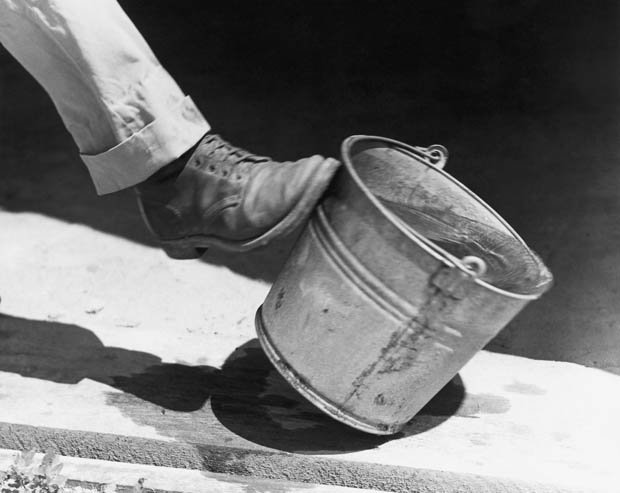
Kick the bucket
Writing a Will is easy and straightforward. I’ve used MHUK’s Free Will service, and I’ve left a gift to them in my Will. In my case, it’s a pecuniary gift, meaning a specific sum of money. But you can also leave items, like cars, books or, or a percentage of your estate, known as a residuary gift (a percentage of what’s left over after costs, like funerals and debts etc). You can have more than one charity in your Will if you want, but I chose MHUK because it’s a charity I care about. Most charities offer a Free Will writing service - so select the cause you care about and contact them. After family and friends are considered, leaving a gift that will help others is important to me. I encourage you to do the same.

If you haven’t made your Will yet, I strongly suggest you do. The peace of mind it brings to you and your loved ones is invaluable.

Photo copyrights:
  • Daisies: FreeImages.com
  • Farm: sunderlands.co.uk
  • Bucket: Dailystar.co.uk
Useful links:
If you liked this, try...


Tuesday, January 23, 2024

Long-lived memories


I've posted before about my mum being a costumier - and the odd things she's made over the years. For a while she worked for a publisher producing costumes to go with book tours; these included Raymond Briggs' Snowman, Fungus the Bogeyman, Peter Rabbit and Dilly the Dinosaur to name but a few. She also made a costume for Postman Pat and a buffalo (took two people for that costume) for a carpet company. She made ballet costumes, hats for Paul Revere bar (well, the girls didn't wear much else), and of course multiple theatrical millinery for ballet, opera, muscials (the crown of thorns for Jesus Christ Super Star), a crocodile for Peter Pan (there where wheels underneath so the costume wearer could scuttle about on stage) and something for Mickey Dolenz (who I met), but I can't remember what.

Thanks to the BBC
 She is now 92 and trying to record her days at Stratford with Gielgud and Leigh, and the many other individuals who became famous, is a challenge. Her memory is is - of course - not as good as it was, but certain things will trigger memories. And sometimes those memories will live on and pop up where you least expect. For example, I remembered Dilly the Dinosaur as soon as I saw him - on BBC's QI programme last week. I will admit to watching on playback, not live, because my mother let me know excitedly that she'd seen herself on TV. There was Gyles Brandreth and Sally, with Dilly the Dinosaur (head model).

 
Sally enjoying the company of
Freda the Royal Python
Sally used to sculpt the model for the heads of her creations in clay, then make papier mache casts. Sometimes they'd be reinforced or made of a stuff called samco (which needed setting with acetone). She would work with pearl glue, this weird red moulding material for plaster casting, foam rubber, calico,  buckram... all those materials whose names are familiar to me still. She would also make face masks in latex - for example in the 'Many Faces of Steed' she made a plaster cast of Patrick McNee's face and then created a number of replicas for use in the show (one of whom was my dad). She also made some hats for Madame Tussaud's, including Raquel Welch's white leather stetson and King Henry VIII's jewelled hat. The more I write, the more I remember. 

But back to plaster casting faces - I distinctly remember a camp bed in the kitchen with some chap lying on it, with straws up his nose and a face covered in plaster. Of course I have no idea who it was under there. For many years we also had a plaster cast of Marty Feldman's nose - I can't remember why, but I do remember going to Queens Park Rangers' stadium and meeting him when I was very small - and being just a little bit scared!

At 92 my mum is still going to art classes and life drawing even though she has macular degeneration and her sight is failing. She has multiple health issues of course, but she goes shopping in her motorised buggy, lives independently and if very often out when I call because she is so busy. 

Think of how much is online these days - those photos on social media, pictures and documents scanned and shared. The mountain of information on geneaology sites, and of course the fantastic archives of libraries and press media (a search of the Barnet Press will reveal more for Sally I'm sure). You never know what will pop up where, and whether it will be something to smile about (as with Sally, Gyles and Dilly), or something to make you cringe. 

Liked this? Try...
***Update! I emailed Gyles via his website saying how happy Sally was at seeing that photo, and the gentleman replied wishing her happy birthday and saying 'she's the best'. That's one long-lasting impression you made, Sally!***

Monday, October 16, 2023

When I woke up

We identify as Happy
I’ve written a lot in my blog about different things like cancer, work, travel and music. For a change I am going to talk about who I am, not just what I’ve done. I am in my sixties, and I have two children, two grandchildren (and three step grand-children) and two years ago I married my wife. How I got here is a long story, but in summary, as a child I played with Action Man (not Barbie), I loved to dress up as a pirate (not a princess), and I did meet and marry a man, but he hated my love of hats (not pretty girly ones) – amongst other things. When I had a strange urge to buy a female friend flowers, or had an erotic dream that included women, and then had a crush on another female friend, none of these things indicated to me I might be bisexual. Yeah – slow on the uptake! 

 So now I identify as lesbian. Because all options are open, of course, but I am not intending to veer from this course now I have found it. I was very loath to talk about being gay when I first realised it in my early fifties, but I embrace it now and openly refer to my wife rather than partner in conversation. Let others’ conscious or unconscious bias do as it will, I am happy and confident with who I am – more so now than I have ever been. I guess I was always a lesbian!

 When I say I ‘identify’ – that may set some hackles rising. Why do we need to ‘identify’? Very simple answer - because society wants to put a label on it. We can’t just ‘be’ – we must fit into a slot or a place in others’ perceptions of spectrum, so we label everything from sexuality to neurological ability. I have a stoma, but I don’t want to identify as an ‘ostomate’. I have had cancer, but I don’t want to identify as ‘survivor’. I have friends with life limiting conditions, but they don’t want to identify as ‘disabled’ – that’s not who we are, it’s just part of our lives. But there are some places you do need to identify, even if it’s just so you can use the right toilet (and yes, I do get looks sometimes when I used the one with the picture of a wheelchair on the door). 

 You may consider me ‘woke’ because I am a gay woman, a charity worker, because I support refugees and challenge behaviours like racism and sexism, and that’s fine with me. If you call me ‘woke’, I will take it as a compliment.

Sunday, June 11, 2023

We didn't catch covid


Holiday blog post time! But not all the pictures of scenery and lovely meals (though Corfu has in abundance), but more a reflection on the visit to this amazing island, which is part of Greece, and has just had a change in government.

We arrived (late due to a problem with 'airspace over Slovakia') and the promised rain was nowhere to be seen. The airport was busy and travellers were hot and impatient. Driving to our hotel complex, I was minded that Lord's - where we were staying - was quite different to the Lord's - where I sometimes work.

The first thing I noticed on the drive is that everything was lush and green. The bottlebrush trees were in full colour, the angel's trumpets were huge, and the bouganvilla was in abundance. There were morning glory growing like weeds and the large totem pole cypruss broke up the mountainside horizons like exclamation marks.

We arrived on the Monday, the day after the weekend election on Greece. Having had a left wing government for some time, and the economy becoming more stable (I read), there was a lack of 'trickle down to the people. The electrion result was a Centre Right party, I think, but they have to have another election in June. I have no idea if that's good for Greece,  I'm not goiing to comment on politics where I know so little. But I made observations.

The dustbins - large dumpsters - are placed along roads all over the countryside. Without exception they were overflowing and rubbish was blowing around into the local area - rural and town. Being a hot country there was, of course, a smell, but maybe they did emtpy them often, they just filled up quick. In


two weeks we saw one dust truck going into a private holiday complex (ignoring the huge pile of garbage outside the nearby monastery). In Corfu they have very small sewage pipes, so all paper used in toilets is binned, not flushed. In our accommodation they emptied the bins almost daily, so odour was never an issue.

I had only ever been to Greece twice before (Rhodes and Athens) and both times for work, so my tourist experience of the country and its islands was non-existent. The people of Corfu were very friendly and accommodating, many (everyone we spoke to) could speak English and probably German too. Prices were reasonable (we could eat out well for £10 a head easily), and the rental of our bike and quad was very affordable. Petrol, too, was cheaper at first, though when we got back to GB, it looked like prices had fallen.

When we drove up into the mountains and through the smaller villages, there were still women all wearing black, and there were still cars that looked like they should be scrapped driving around with bits hanging off them. There were tourists on quad bikes and 'twist and go' (like the bike above), and the smartest cars (even the one we saw upside down with an ambulance next to it) were usually hire cars.

The main roads were good (very wiggly due to the landscape), but the side roads were full of potholes. The mountain roads varied - from smooth tarmac to concrete corners and then potholed single track - and all on the same route.

The views from the mountains were amazing. We stopped at one taverna and chatted with the owner whose family had lived in the area for generations.  He told us how the Kaiser built on the next peak, but they all laughed as the water was on his peak. And he told how his grandfather taught him how to find water, so that's why he built his taverna where it was. He had olive groves and served us his own oil, he had vinyards and served us his own wine. He was old, gnarly, and friendly. He didn't like the government (which I wasn't sure) and we had similar opinions of the lack of politicans' understanding of the everyday life of people.

The beaches were clean, and even when the one night of storms brought in all the seaweed, it didn't impede our delight in laying on the hot sand and swimming in the shallow, clear sea. The jellyfish arrived in the second week, but we managed to avoid them.

I had no problems travelling or swimming with my stoma, which for other ostomates may be reassuring. I didn't even get heat rash around the seal, thankfully.  We flew there and back on an Irish airline and I really don't like them. The staff are fine, but you have to pay even to fart, it seems. Thank goodness they didn't charge me extra for having a stoma!

Two weeks is a long holiday for me. The only other time I've been away than long was to Australia in 2018. It was a lovely two weeks. We both relaxed, enjoyed the island and enjoyed eachother's company and reading (audio) some great books.

And, we didn't catch covid.

Useful links:

Liked this? Try


Friday, March 17, 2023

Growing around grief

Working in the charity sector over the years I have met so many amazing people, from the relatives of loved ones with Alzheimer’s, to survivors of serious accidents - and the families of those who did not survive.  

Dealing with grief at work is very different to dealing with it in your personal life – and I mean both for the bereaved, and for the professional.  In the charity sector, gifts ‘in memory’ of a loved one are hugely important; they allow the bereaved to celebrate a life passed, and also to support a cause close to their heart in that process. It could be anything from Air ambulances to Zoos – there’s usually a relevance to the deceased.

Supporting a charity gives the family the opportunity to share their memories, thoughts and wishes, often through dedicated ‘in memory’ pages on a website. This little bit of immortality can mean a lot to a family and help them process their grief.

Many years ago I learned about Elizabeth Kubler Ross’s Stages of Grief, and later on researched more about her and her extraordinary perspective on life after death.  Her ‘model’ of grief is well known and very logical, but there are other models, such as Tonkin’s ‘growing around’ grief – grief does not really diminish over time, we just grow around it.  There are other models, and Freud had plenty to say on grief too, but models aside, grief is hugely personal.

I lost my father when I was 13 years old. I was very young; I think you could probably equate it to 10 or 11, given the maturity of young people today. My brother’s reaction was to protect me, initially, and then – as my mother disappeared into her grief – to leave home. My reaction? I can’t accurately recall, but I think depression was certainly a big part of it.

Although my father died more than 50 years ago, I still grieve. On the train home from London the other day, I talked to him – told him all about my day (silently, I didn’t need extra space on the train). I clearly saw him in my mind’s eye, sitting in the empty seat opposite me, and he reacted (in my imagination) how I remembered he would have done. 

I didn’t go to my father’s funeral – to the church or the burial. Maybe it would have helped me to have gone, I don’t know, but now at any funeral (even someone I don't really know) I am a useless emotional heap. That may be a legacy of unresolved grief, but it’s often embarrassing. Yes, I have grown around my grief – I don’t wear it daily, but it is easy for me to slip into sadness when I think of all the years I never had with my father, how he never knew me as an adult, or heard me sing (though he may well have hated my music choices), or met his grandchildren. But then again, I never saw him grow old, either.

Today someone said to me that grief is ‘love with nowhere to go’. I found that very moving, but also hope that as we grow around grief, our love is not lost, but finds new avenues, and stays true for those we have loved and lost.

Useful links:

Related blog posts

Friday, December 23, 2022

Family archives


I have some interesting documents from various family connections - such as an acceptance of US Citizenship for Edward Keller (dated 1876) and a rather unpleasant letter about my grandmother's divorce from Leslie Hemsworth (who it seemed also ended up in the USA). I have materials from my step-grandmother too, and of course the full Sheppard Family Histories (but they are staying safe with me and will remain with my family).


The Keller family were my grandmother's second husband's, but he was alienated from his family (previous wife/children) so I have no idea what happened to them or whether they would even be interested in these old documents.

Sepia photograph of Peter Ricu `804

I have looked up to see if there are any groups researching Family History for these families, but unless I wanted to sign up and pay for a service I don't need, there doesn't seem to be an easy way to share these interesting snippets of history. This photo, for example, is 'Cousin Peter Ricu' dated 1804. Who was he? In smart military uniform, isn't he.

I don't want to destroy these old documents, but then again, what do I do with them? I can keep them until I shuffle off, but then someone else will just throw them away.

If you have any ideas about what to do with these documents I'd appreciate it (add in comments). I don't want to throw away those intriguing insights into social history.

Liked this? Try...

(Sorry the wrap around the photos wasn't working today!)


Friday, July 15, 2022

Don't defer diagnosis

Have you put off going to the doctor because you are worried about the diagnosis or think you shouldn't bother others?   I have.  Have you ever said any of the following? I'd be surprised if you haven't:

"I'll leave it for now", "I'm sure it'll get better in time", "I'll get round to eventually", "yeah, but I have to... first". 

Here's a quick list I'd like you to read and consider carefully. Put aside your 'yeah but...' and put yourself first. 

1.    You are not 'wasting' the doctor's time with a symptom. However minor it might seem, if it is a marker for disease (eg blood in your urine or faeces, unusual persistent pain or anything else which you know is just not right for you), then tell your doctor and get an appointment. Insist if you have to.

2.    Attend all your scans and tests, no matter how uncomfortable or unpleasant. A scan or smear etc can detect something that you can't see or feel. You are not wasting time by attending these appointments, in fact you could be saving more than just time.

3.    Get on with it. It's very simple - the earlier something is diagnosed and can be treated, the more chance you have of living a longer, healthier life. And remember, early diagnosis may also mean you can sigh with relief that whatever has been bugging you is, in fact, something easily treatable.

4.    Have a regular 'feel'. A small lump could be something as simple as a cyst, and if it's anything else, the sooner it is attended to, the better.  You know which bits of you to check, I'm just reminding you to do it regularly.

5.    Getting a diagnosis can be scary, but it's also vitally important as early diagnosis has such an impact on the outcomes. 

6.    The shock of diagnosis (for you or a family member) can be huge. This is perhaps the hardest to get your head around, but is very important: take control - work with your clinicians, friends and family, with support groups and charities. Diagnosis is often a 'first step' in your journey, and everyone takes a different path. Your preferences and wishes should be listened to by all involved in your care. 

7.    Treatment can be challenging, but it may mean the difference between all your friends and family being there for your next birthday, or for your funeral. Treatments for different conditions are highly personalised these days so someone else's experience may not be a good compass for your journey. 

8.    It's OK to ask stupid questions. And it's OK to ask them more than once.

9.    You are not alone. You never know who else may understand what you are going through -  share (in the right way, with the right people, in a way that suits you). You will be amazed who comes out to support you.

I was prompted to write today not only because of my own experience, but because I read about a family who has had their child diagnosed with a life limiting condition. The diagnosis (which they did not delay) has shattered the family and they were frozen with fear. Nobody wants a diagnosis that casts such a shadow over their lives, it's out of human control, it's almost mind-bendingly difficult to assimilate. But others stepped in to seek help. In reaching out, their journey is no longer quite so desolate - there will now be someone there with them, with a lamp to help light the difficult path ahead.   

Useful links

Liked this? Try...

Photo courtesy of https://greatpeopleinside.com/dealing-with-procrastination/ 

Author's note: after my first draft of this post, I went through and took out all the 'don't' statements. It's too easy to list what not to do - I hope turning it into what we 'can' do reads better.

Thursday, May 19, 2022

Memory triggers

The real Kempton
I took my mother Sally to see 'The Duke' - a film about Kempton Bunton, and the theft of the famous painting of the Duke of Wellington by Goya. It was a lovely film set in the 1960s. It was fun to see the original footage of the 60s, with Jim Broadbent added, and the whole timbre of the film gave you a real sense of the period.

At one point in the film, a reference was made to the Dr No film (which briefly showed the painting, implying maybe Dr No stole it!), and Sean Connery, suave and smooth as ever, gives it more than a passing glance.

Mother and I thoroughly enjoyed the film, and on driving her back home, it had obviously triggered lots of memories. "He took me in his arms and kissed me" - she was referring to Sean Connery who, in his early days, used to regularly drink in a pub in London frequented by actors (including my dad amongst others). "What did dad say when Sean snogged you?" I asked. "Oh, he did it nicely; he kissed all the girls." 

Connery in the 60s
Mother has often said that Sean was a great one for networking and drinking with the 'right people', whilst my dad came home to his wife and (by the mid 60s) his two children. Is that why my dad was less successful than Sean? Well, maybe the looks had something to do with it too. 

The memories continued, and she reminisced that Alec Ross had been dad's best man at their wedding. She went to Alec and Sheila Hancock's wedding on the train, with Sheila's agent, Miriam (and she can't remember the surname). She thinks Anthony was away at rep somewhere, and met him there. 

Years later my dad, Anthony, saw Alex, and he ignored him. It wasn't long after that Alec passed away - too young. Sheila, however, is still going strong today - and I wonder if she remembers Sally?

I must do more to capture Sally's stories, she started her career at Stratford working with Sir John Geilgud and Richard Burton, Vivien Leigh and ... she drops so many famous names that I have to sweep up afterwards! 

Liked this? Try...

Apologies to the copyright owners of the photographs, I couldn't identify original sources. 


Wednesday, April 06, 2022

Two farewells and a welcome

My first farewell is to my wonderful son. He has gone to Australia to be a fully fledged citizen. He's got the long floppy blonde hair, he can surf, and everything!  Although I am of course sad that my son won't be just two hours away by car, I am so excited and pleased for him. He is going on the sort of adventure that, if I was just a little bit younger, I'd love to go on myself. He has a lovely partner, an amazing Australian family who have made him one of their own, and a whole exciting future to plan and enjoy. And, of course, we will get to go and visit him. I can't wait to get to Australia again and see more of that amazing country - and of course get to see my son. I may even visit Judy, my 'cousin' - the granddaughter of my father's half-brother who emigrated when he was just 16. 

With Alex leaving for Australia, our final ties to the market town of
Royston
have been severed. The little house that I loved renting, and then provided a home for Alex too, has gone back to its owner, and the kind neighbours and friends we made are left behind. But I have so many happy memories - not just of the last few years, but of the many I spent in that town where my children grew up and where I was a PTA committee member (two schools), a member of the local Writers Circle, and generally a happy resident. Royston is special in its own way - it is on the crossroads of two ley lines, the Greenwich Meridian and the two oldest Roman Roads in Britain. There is the unique Royston Cave, lovely Priory Gardens (where  my children learned to cycle) and - once upon a time - there was a swimming pool and cinema. Royston changed, I changed, we all change. Although I also spent some dark time there, the familiarity of the town and the people in it was a comfort then. My memories of Royston will be good.

My final welcome is to my second grandchild, a little girl born in February. There is nothing that marks time passing like children. You can be married for years and nothing seems to change, but have a child and every month milestones are reached, and you notice the weeks, months and years. You have a comparison in your life that is unmatched. My babies are adults, my daughter a parent herself, and I am delighted to welcome this beautiful little girl.

These are hard times. There is a war on which I fear is only the start of bigger, and worse, things. There is more financial pressure on families and the economy than there has been for generations. Covid is still here and very present, and still making people ill and taking lives. I have a limited contract of work and will be job hunting again soon. Nothing stays the same. 

At times like this, when there are so many dark clouds on the horizon, then I look to the good things in my life; I have a job now, I have a wonderful (albeit far flung) family, an amazing wife, I live in a beautiful place and have many good friends. Things may change, things will change. This is life. Treasure it. 

Liked this? Try...