Tuesday, September 09, 2025

Honouring a friend

One of the toughest times with the breakdown of my first marriage happened to be at the same time as I was working a job that was a long way from home – Colchester. This was too much of a daily drive from Royston, so during the week I stayed with friends in Ipswich and only went home at weekends. I remember the dread I would feel on a Friday afternoon, and though I wanted to see my kids, I did not want to go home.

But this post is about the positive, the love and support of friends and the wonderful people I got to meet in Ipswich. Staying with my friends was such a breath of fresh air – I’d played music with them many times (even had a couple of band iterations). Whilst staying with them I met more of their friends and got involved in local activities, both musical and otherwise (including the local pagan moot).

Fast forward just over ten years, and my lovely friends (names changed) Jenny and Ric had moved to Wales. And at just 60 years old, a few weeks ago, Ric was suddenly gone. Totally unexpected and devastating for Jenny and her family. Everyone was shocked – just a few days before he had been cutting back the laurels that were overhanging the stream and blocking the flow.

Instead of a funeral, Jenny and her family chose to celebrate Ric’s life, and – in line with many pagan beliefs – his onward journey. Even though I hadn’t seen them for years, I really wanted be with Jenny on the day they had chosen for celebration.

I drove to Wales on the Saturday, and next day went up to their home where many friends old and new were gathered. Now I must confess that at funerals I am a mess – I know this is probably related to my own unresolved issues around my father’s death – but it may explain why my eyes leaked so much. This was a celebration of life, not sadness, but I found it hard to not see Ric there, with Jenny. It was so obviously a perfect environment for them both.

We were in Wales, so it was raining heavily as expected - right up until the ceremony, when the clouds parted and a glimpse of sunshine brightened the warm, but wet afternoon. The ceremony began with Jenny walking with Ric’s ashes in her arms around a stone-outlined labyrinth that had been laid out on the grass. All I could hear was the quiet babbling of the stream, the call of the long-tailed tits dancing from tree to tree, and the fresh rain-bathed smell of sloe, apple and oak in the grounds around the house. Once in the centre she sat quietly and first family, then friends, entered the labyrinth with a beautiful peace poem on their lips. I imagine it could have been a slow parade with a shared chant, but instead people read quietly to themselves, and as more and more entered the labyrinth on their way to Jenny and Ric in the centre, the solemnity was replaced with something more beautiful. As each of us passed one another, we hugged. Some got ‘lost’ and headed the wrong way and there were smiles and chats, redirection and squeezing past; when we reached Jenny in the middle, we hugged her and gave her a piece of paper with a message for Ric. Mine said ‘a duck billed platypus’. He knows.

After we had all entered and eventually left the labyrinth, Jenny emerged bearing Ric and the many messages. Jenny, Ric, her son and friends who were helping officiate went into the stream. There Jenny took Ric’s ashes (in a biodegradable box) into the water. More ceremony followed, with singing, rituals, calling to gods and goddesses (not my thing, but if you replace ‘god/goddess’ with ‘nature/universe’ it works for me). Ric’s ashes and our messages were dissolved – Jenny and her son stirred up the water and she looked so strong, yet so vulnerable. It must have been so hard to do, yet it was right for her, for him, and for her family. We were led in indigenous song whose words we did not understand, but when our voices joined, there was a beautiful, gentle hum. Jenny recited a ritual whilst being accompanied by the delicate tones of a pan drum, followed by a flute-tune that I knew very well and had indeed played with them many times. Music and nature – a perfect representation.

Afterwards we headed back to the house (and the rain started up again), and though I had to leave to travel back across the breadth of the country, there followed shared food and more music. That’s very much how I remember them both – sharing, musical, warm and loving.

A typical English funeral has some unknown pastor talking about someone they (usually) never knew – with family and friends separated in rows of wooden seats, joined only in singing and grieving. I may not have understood the pagan rituals or share all the same beliefs, but I very much preferred this kind of event where we could hug, talk, smile, cry, and participate in a true celebration of Ric’s life.

Further information:

Thursday, July 24, 2025

There’s a hole in my belly

(C) Microsoft stock photos.
During everything that went on with lockdowns, furlough and cancer treatment, 2020 was a challenging year. In the January, my wife had her very last treatment for breast cancer, and I was diagnosed with bowel cancer in the March.

One of the pressures of Covid was that I went through all my treatment – radiotherapy, chemotherapy and surgery (a seven day stay in hospital) on my own. My wife could not attend my appointments, as I had with most of hers. Thanks to the amazing support of my wife, and the fantastic team at Ipswich hospital, I managed to stay quite positive through most of it. But after surgery (an ultra-low anterior resection), I had a new hole in my belly - a loop ileostomy (a kind of stoma). A routine, natural bodily process became something totally different overnight.

“It is now estimated that one in 335 people in the UK are currently living with a stoma. Individuals of all ages can have a stoma. Stoma surgery is undertaken to treat a range of illnesses including cancer, diverticulitis and Crohn’s disease or following a trauma to the abdomen.” – Colostomy UK

(C) Bullens.com

There are many reasons why you might have a stoma - mine was cancer. Some people can have them reversed after a while. For the first year I had really hoped I could, because the thought of 'being normal' again was something I clung to. But mine is not reversable without considerable risk. Understandably, the impact of this major physical change is not just on the body, it’s on the mind too.

For some people, the impact of having a stoma that you literally wake up with one day (after surgery) can have a negative effect on their mental health. In the online groups I belong to where we discuss all things stoma, we have a joint dark humour, but also the humility to share the challenges – from the practical to the emotional.

For example, feeling totally unlovable because you have a bag. Embarrassed to do things like go swimming or visit the beach, because you are so self-conscious.  And some people react against their situation in a way that severely affects those they live with – such as not taking the care and hygiene needed when changing – almost deliberately driving away loved ones. And not untypically come issues like depression, anxiety and even PTSD. A stoma also changes how you process food, so you may have to change your diet too, which can be even more challenging if you have disordered eating.  

Human physical resilience is extraordinary – ostomates (our collective noun) learn to adapt and manage and get on with life with a bag. But some people with a stoma worry about perception, myself included: what do my partner/my family think of me now? what will I say at work? what do I think of myself because I have a stoma? Although I have adapted to bag-life and my partner is amazing, for many it is a challenge. These are some quotes from our support groups:

“How can I be intimate with someone with a stoma? I’m worried it will put them off.”

“Struggling with being confronted at disabled toilets - no you don’t look disabled use the ladies!!”

“I’m worried about leaking on holiday.”

“…I told her about my stoma. That was that.”

“I look in the mirror and hate what I see”.

I have three simple bits of advice:

  • You are not alone! There are thousands of us with stomas – find a safe online or local community to join.
  • Find the charity that supports the reason for your stoma (eg Bowel Cancer UK, Chron’s & Colitis UK etc) or reach out to Colostomy UK. If your mental health is being severely affected, reach out to a mental health charity like Mental Health UK,  Rethink Mental Illness or Mind. These charities understand your challenges and can help you.
  • Believe in yourself. Remember that your bag does not define who you are. You are still the person you have always been. 

I also have a silly rhyme I use – “I’ve a hole in my belly where my gut pokes through, so I don’t use my bottom when I need to poo”. Humour is my way of coping.

Useful resources:

Related blog posts...

Friday, July 18, 2025

Madeira part one

We went on holiday! Two whole weeks on an island we’d never visited, with adventure waiting around every corner.

The mountains in the north
Madeira’s landscape is extraordinary—no wonder the Portuguese were so taken with it, and why it changed hands several times over the last four hundred years. Although it originally seemed uninhabitable to early explorers, the ingenuity of Portuguese engineers (sadly using slave labour) led to the construction of remarkable channels that carry water from the lush north to the dry south. These are called levadas, and they’re one of the features that make Madeira such a wonderful destination for walkers.
Levada PR 6.3

Our impression was that the north resembled New Zealand—high, tree-covered volcanic mountains draped in a persistent veil of cloud. The south, by contrast, felt more like a Mediterranean island: sunny and drier (though we were in the Atlantic ocean). The island isn’t large—about 35 miles east to west and 13 miles deep—so as long as you have a car and a head for heights, getting around is easy. Although Portuguese, Madeira is geographically closer to Africa than to mainland Europe.

The more recent engineering that impressed us was the tunnels! The old roads, which wound around mountains and clung precariously to crumbling rock faces, have been replaced by sleek tunnels that punch straight through the mountains. The new coast roads (head west from the airport, along the coast, and then north) probably has as much tarmac underground as it does above.

One thing we learned quickly was that if the weather in the north (where we were staying) wasn’t great, we could simply head south. We drove through one 3.1 km tunnel in the middle of the island, and as soon as we popped out the other side, the clouds were behind us and brilliant sunshine lit up the landscape.

The hotel was nice—though a bit Miss Havisham (she was four-star in the ’80s, a little faded now). But the staff were lovely, and the breakfast was a great fuel-up for the day’s adventuring. Our favourite places were the levadas (though we only walked one), Calheta beach, Fanal forest, and the local Brasa restaurant (which served amazing beef skewers).

The 'witch tree' Fanal forest
Like Iceland, Madeira has very little native mammal fauna. I managed to spot one of the native trocaz pigeons—no photo, sadly. The endemic sparrowhawks had a nest near our balcony, so I did get some good shots of them. The other prolific wildlife was the little lizards, with the males sporting a gorgeous green. Although most scattered when people approached, I found one sunny spot where a gang was sunbathing—and I even got to hand-feed them.

The island is also famous for its flowers, and they were out in abundance during our visit. The hills were draped in wild agapanthus, their huge white and purple heads nodding in the breeze, and the hydrangeas were enormous! Much of what we saw is best illustrated rather than described, but I’ll highlight a couple of our adventures in more detail in future posts.

Useful links:

Liked this? Try...
All photos (C) Carolyn Tyrrell-Sheppard


Wednesday, April 23, 2025

One morning at Vauxhall

I left Vauxhall tube station, headed up the stairs to the street. The lights changed and I moved with the crowd, avoiding the stragglers, dodging and cursing the e-bikes that didn’t slow at the crossing.

It was a normal day. I had left home as usual, got the mainline train then the tube, and was heading to my office opposite the houses of Parliament. I often joke they are near enough to see, but not close enough to throw something at - the Thames lies between me in my accountant’s office and those in power.

The morning was bright with a cool wind, and the commuter morning seemed like any other. But as I crossed the road intending to head along the Embankment and cross by the pub – I didn’t. Once over the road by Bridgefoot, I turned left into the first entrance.

“Morning Bob” I said to the security guard. “Morning Miss Carter” Bob said. But – I didn’t know Bob - I’d  never walked into this building before in my life! I felt like someone else had taken control of my brain and body. I went into the building, to the lift and opened my handbag. Usually packed with things like lipstick, escapee sweets in sticky wrappers, dog treats and multiple pens, today my bag was neat inside – nothing more than a very expensive lipstick (not my usual brand), a designer purse and a swipe key. I used the key to enter the lift and went to the third floor and marched straight to … my desk.

My brain was racing whilst my body operated on some kind of hostage automation. I didn’t know Bob, and I haven’t been Miss Carter for years! I have a husband, a house in Cheshunt, a garden, a dog…

I sat at the desk and opened up the laptop sat there, pressed my forefinger to a pad, keyed in the password and started to work. Miss Carter was taking over… she knew what to do, and she was brisk and efficient. I felt trapped behind the wall of this new person, but I still knew who I was, and that I should be somewhere else, looking at figures, not contact mapping across continents.

I carried on working, as if it was the most normal thing in the world. At lunchtime I headed out of the building – Bob wasn’t on duty, but I didn’t have to wave my ID card – the men with their stab vests and discreet guns seemed to know who Miss Carter was. I fleetingly wished that I did.

I had intended to head back up the Embankment to my office, to tell my boss that I’d had the strangest morning and apologise for missing half the day. But instead I crossed the road to the cafĂ© and got a latte and a sandwich. I’ve not drunk coffee for years! It tasted familiar, comforting. I walked across the bridge, looking at the Thames, the coffee in my hand and the sandwich in my bag. I couldn’t fathom what was happening – I knew who I was, I was Mrs Walters, I’d married Michael twelve years ago in Spring, in my hometown of Bath. It had rained. My father and mother were there. I suddenly felt grief. My mother – who I’d seen at the weekend and had gone dog walking with – I knew she was dead. But she had died two years ago, so how could this be new grief?

Watching the barges full of the city’s waste create a turgid wash that tugged at the exposed sandy banks of the Thames, I felt heady, like someone with a glorious hangover that has just taken another drink. I took myself to a bench and ate, watching myriad folks go to and fro across the river, and I felt my sense of self evolve, conflict, challenge memory, and then resolve.

I put my sandwich wrapper in a bin and marched smartly back to the office. Bob was back, and I smiled and flicked him a short wave. “Busy day ma’am?” He asked.

“Not too bad Bob,” I replied, “not a late one today thankfully.” Inside I knew what I meant, but I also wondered what the ‘late ones’ were. I had a sense that tickled like a remembered flavour, of dark rooms, bright screens and the bustling of many people in a hushed, urgent silence.

At the end of the day I waved goodbye to colleagues at nearby desks who were definitely staying late. I headed for the tube station. A little part of me wondered about heading to King’s Cross and back to Cheshunt, but Miss Carter - me - knew that my flat in the Angel was waiting, with a bottle of Sancerre in the fridge, and a box set on the TV.

Into the hot train, squeezed between indifferent bodies, I wondered briefly about Michael, if he existed, if my house, dog, garden – even my mother – existed still. Well, they didn’t now, not for me – Miss Sarah Carter. No time for men, no time for gardens or pets. Just time for my next assignment.

At the flat I shucked off my high heeled shoes (I thought I’d come out in brogues this morning) and looked around. The flat was neat, tidy; Marcella had been in to clean. Having poured myself a glass and vaguely looked into the fridge for something other than yesterday’s cold pasta, a brief glimpse into yesterday's life peeked back at me from a tin of cold beans. I took them out, threw them in the bin.

Tomorrow was another day, another challenge, and someone called Mrs Walters drifted into memory as if she were a story recounted, not a life that simply vanished one morning on the way to work.

Liked this? Try...

 (C) Pictures and story Carolyn Sheppard April 2025

Thursday, February 27, 2025

Excuse me, are you dead?

A few years ago, I applied for credit and was refused. I contacted  my bank, Santander who told me I was dead. Ahem... I hadn't noticed! Very remiss of me? No, they checked I really was alive, apologised and made amends (£200), but for two weeks I was dead according to the financial world. Not dead for 'tax purposes' as the dodgy Arthur Daly once recommended.

Check out the old 1932 cartoons! 
As someone who sends out those letters and emails asking for money for a good cause (not worked for a bad one yet), I am very sensitive to the hurt that can be caused to loved ones by sending letters out to people who are deceased. We take every precaution! If we are notified by a relative, or by returned post, we update the record and they are not mailed again. We even use external agencies to check for notification of death using precise matching of name and address. We really don't want to send a letter to a dead person, firstly so as not to upset the remaining family, and secondly because it is a waste of charity resources.

We recently sent out a mailing and did a 'screen' to remove those who are no longer living. The printer sent us back the records to remove as a result of the screening. Interestingly enough, five of them still had live direct debits with us. And then, one updated their address. Hmm... methinks that's pretty hard to do if you are dead!

I asked the question on a fundraising chat board and, anonymity promised, I discovered that we were not the only ones being told that our living donors were dead:

"I once had to remove the phone from one of my team who was busily letting a donor know they were dead and therefore she couldn't help them"

"We've just had a supporter restart a Direct Debit who was marked deceased by BACS last year"

"Have had a “deceased” donor on the phone asking why they didn’t get a thank you letter for a donation"

Now the first comment might make you smile, but at the heart of this is the people who have lost someone, who we don't want to mail or contact because of sensitivity to the family. Sometimes a direct debit may continue even with a deceased notification because it's a joint account, and the remaining individual wants to continue supporting the charity. But it goes to show, you can be as careful as you like, but it can be a very hard one to negotiate and make totally pain free. 

In closing, I would just like to apologise to every family who has received mail to a dearly departed, charities really do try their best!

Useful links (possibly!)

Liked this? Try...

Picture source: not sure, but it's from an old Silly Symphonies animation.

Monday, February 24, 2025

Iceland part two

In November 2024 the volcano south of the airport decided to flex its magma and attempt to wipe out a town, destroy a few roads and seriously threaten the Blue Lagoon and the nearest power plant. It was spectacular! Not world-impacting like the 2010 eruption of E17 (which is on the glacier we later visited) - but still impressive. Would we see lava? Well, not 'in the flesh' as it were. The volcano was rumbly, but not performing for visitors when we were in Iceland.

Human made lava
Day two: doing the cultural bit. We had our breakfast and headed into Reykjavik, having decided that the Lava show and Northern Lights exhibition were the two places we wanted to head to. Deciding on the Norther Lights first (we hadn't seen them yet, as it was so cloudy), we rocked up to find it shut! And a sign on the door saying they'd moved - phew! We headed to the new venue but arrived at the Lava show venue first, with just 10 minutes before the 12 o'clock show. Lava first! 

When a couple watched the lava flow past their house, they were awestruck. They wanted us all to share in the wonder, but without the evacuations, ruined roads and danger to life. So they built this show with a massive burner that melts the black laval sands and turns them back into hot lava. It was mesmerising! The presenter, Joanna, gave a really interesting talk on the geology of Iceland, how the lava is released, types of lava flow (using two cute but forgotten Hawaiian terms), and then demonstrated how it would buckle, turn into glass, and retain heat even when the surface was cold. She made lava strands (witches hair) and - as the lava had already been melted once and was 'gas free' - the result was like black glass. 

Northern lights watching

After a very enjoyable 'demonstration' we went next door to the Northern Lights exhibition. You might wonder how they can showcase a natural phenomenon, but they did a great job. There were really clear explanations of what causes them, where they happen, the different colours (different heights in the atmosphere) and an amazing photography display in an almost cinema-sized room where you could sit, or even lie down and watch the Northern lights in all their glory. If we didn't see them in real life, this would be the next best thing! The tour finished with steel swivel pod chairs and a VR headset that worked amazingly. We got our Northern Lights fix!


Driving out of Reykjavik we headed to the Harper Hall (an amazing building) but as we could not park anywhere, we headed out by following the coast road. It didn't take long to reach a lighthouse and a nature reserve. We could have walked to the lighthouse along a little causeway, but the tide was coming in and we didn't fancy an afternoon being buffeted on the lighthouse island, waiting for the tide to go out again. Instead we started to walk along the sea wall (looking down on black sand) and we saw our first proper wildlife: King Eider ducks, purple sandpiper (a first for me) and a speeding hawk that must have ben a gyr falcon, although it was too speedy for a confirmed ID. We had a lovely walk through the nature reserve up to a large pond with Whooper swans, pink footed geese and a host of other ducks. The wind was whistling round us, and it was overcast, but the fresh cold air was exhilarating. 

On our way back we stopped for a late lunch at a small restaurant and we had raw beef and cooked cheese. I say 'we', but I ate most of it.

Liked this? Try...

Useful links:


All photos (C) Carolyn Sheppard

Tuesday, February 18, 2025

Iceland part 1

Oh, I've been a lax blogger! But Sheena and I have been busy, for sure. Our latest adventure was a trip to Iceland in February. 

Day one: we had stayed overnight near the airport as the flight was at silly o'clock. All went smoothly and we landed in Iceland at just after 9am local time (which was the same as UK time). It was cold, but not snowy as I had imagined. There was old snow on the ground, muddied and slushed, but the vista was of rocky, snow-highlighted terrain rather than the white-out I had anticipated. Warmer than usual for the time of year perhaps? But it was chilly, and the wind was biting!

Stripy Icelandic Mountains

We eventually found our hotel after asking directions (sent to the wrong place, with same road name), and using an insufficiently detailed map until at last our sat nav started to work. On the way up the main road from Keflavik to Reykjavik we passed the biggest fish processing plant I've ever seen - it must have been about a kilometre long! But then fishing is a mainstay of their economy, so not surprising.

As soon as I walked in I realised it was the same hotel that I had stayed in during my previous visit 8 or so years previously, even though I hadn't made the booking this time. Picture hunting lodge (entrance) crossed with motel style parking and rooms, and a sports bar with video screen (showing flickering firelight most of the time). The ground was icy - and there were dirty piles of snow in the corners of the parking area. Across the road we had a lovely view of the KFC (no, we didn't eat there once). Our room upstairs looked out across the town (Mosfellsbaer) to mountains that were striped with snow that snuggled away from the wind in the channels made from years of meltwater scoured paths. It was picturesque, but somewhat bleak without the mantle of complete snow cover. It was a nice room, a very comfy bed, and pleasant staff. The breakfast was a help-yourself buffet which enabled us to fill up heartily for the day ahead.

We spent our first day relaxing and went to the local supermarket to stock up on some sandwich

Our hats kept us warm and made others smile!

components. We visited the bar in the evening and chatted with some other residents in the lounge, plus an Icelandic storyteller. Now, he probably didn't picture himself as a storyteller, but we all recognised him as such. He started off as a fisherman, working out of Dubai. He had an apartment in Dubai. He was the son of the family who owned the massive fish processing factory. His father was dead, his mother was an alcoholic. He inherited the family business and was a fisherman. I have never seen a fisherman with such soft, small hands! But who knows, maybe he was the sonar operator or something. He had an apartment in Iceland, no, an apartment and a house, or was it now two houses? He was upset that girls he met wouldn't wait for him for three months every time he went to sea. He loved being at sea, even though as a millionaire he didn't need to work. He also loved to talk, but seemed to be following in his mother's footsteps. Our host came in and spoke something rapid and harsh in Icelandic. He sloped back to the main bar, like a contrite child.  

It was good to exchange pleasantries with the other guests, and share what we had done or what we were going to do. Our first day was relaxing and we slept well after our very early start. No Northern lights out the window, but rain! 

In part two - LAVA!

Useful links:

Liked this? Try...

All Photos (C) Carolyn Tyrrell-Sheppard

Monday, December 02, 2024

Reflections

I look at my blog sometimes because there's something there I'd like to refer to, such as a cancer story, or something to do with work, or just because I'm prompted by a memory. My blog is really my public online diary. But that's OK, I know very few people read it, but it will be here for my family in the future, and for anyone who is casually browsing and finds one of my stories or posts on one subject or another.

I was looking through my cancer posts as there was news in the Telegraph that smear tests may be less invasive in future. Oddly enough, I had my latest test recently, because I had some HPV cells in my last one so instead of falling off the test list, I'm staying on for a while. Thankfully, all clear this time.

I wanted to share with colleagues how important it is to attend these tests, as uncomfortable as they may be. They really could mean the difference between life and death, or life and a more invasive treatment regime that would make the smear test pale into insignificance. By invasive I mean things like surgery, chemotherapy, radiotherapy. Catch it early, and you are likely to have a better cancer journey than many.

My cousin's cancer is back, but he is very stoic and - whilst having treatment - is fundraising for CRUK. He is confident that it will be kept under control - and he kept up his tests, so it was spotted early. I have had another colonoscopy because I had some abdominal pains, but they were clear. Yes, the colonoscopy was definitely 'not fun', and the results were negative, but I'm glad I went through it instead of leaving it to chance, and also letting the thought - and that can be almost as destructive as disease - continue to nag at me.

 The old mine, Adelong (C) 
Are you worried? Do you have something that doesn't feel right? Get it checked! Don't worry about your GP's time, that's what they are there for (and they'd rather treat you sooner too if there is any need). Are you worried it might be something, or nothing? Well something is a hell of a lot more worrying than nothing, so go get that check, and eliminate the uncertainty. You and your family will benefit from positive action, I promise.

But back to reflections, as well as looking back on my cancer journey (and Sheena's), I also read one of my posts about my visit to Malaysia and Borneo - and that's a memory I treasure. I wish I could go back and visit Baku forest again and see the proboscis monkeys, or cross the river in Kuching to taste one of those impossibly bright cakes they sell, or see a langur in the wild again. But, I did those things - how lucky am I? 

Look after you, as well as those around you. Follow up on those tests, anything that doesn't feel right. Check it out. 

Useful links:

Liked this? Try...

Thursday, October 24, 2024

An unusual childhood

I've written a bit before about the different childhood I had, but not in much detail (see Liked this? below). I could probably write a book, but instead here's a short poem. One thing my mother talks a lot about (she's 92 now) is regret. She can't undo the past, and there were so many good things, different things, that I learned that I would never have done without that childhood. I know how fabric should hang, and whether it is right for the period, for example.  The world of CGI has changed costumery for the cinema, certainly, but theatre still relies on a lot of craft. My mother was certainly a very talented craftsperson.

Growing up

Samco, acetone, buckram, calico

Pearl glue, foam rubber, plaster, fur fabric

Mother much too busy, for the small child


Giant moth, Sontaran, Mutant, Cyberman*

Pepper pot, Cuckoo, giant flies, tutus

Comedians and actors, smile at the small child.


Plum pudding, ballet masks, feather boas, jock straps

David Wood, Gyles of course, Raymond Briggs, dinosaurs

Directors and dancers, not noticing the small child


Peter Rabbit, Whatamess, Gladiator, Fungus

Marty Feldman, Mickey Dolenz, Morecambe and Wise

Placido bumped into, by the small child


Coliseum, D’Oyly Carte, Drury Lane and Shaftesbury

Rooms of feathers, rooms of foam, rooms of fabric off the loom

A curious playground, for the small child


Hats, masks, monsters, jewellery, designs

Costumes, sequins, Jesus Christ’s crown

All distractions for the young child


Working on Christmas day, working on holidays

Pins and needles in the chair arm; pricked fingers

A normal day for the wheezing child


Clay, there was a lot of clay! The picture above shows Gyles and my mother - he is posing for the Dilly the Dinosaur costume she made him for a book publisher's promotional tour.

Liked this? Try...

References:

  • Dr Who monsters *Sally made the Minoptera, the Solonians, and parts of the Sontarans, the Gell Guards, and bits of Cybermen and other costumes/props.
  • Placido Domingo I bumped into him at the Royal Opera House, when he was in Girl of the Golden West
Photo credit: BBC TV. 

Wednesday, September 18, 2024

Binary bigotry


Binary bigotry is a term I have coined because of the ‘unthinking’ likes and shares in social media of hateful memes. I have seen several social media posts (shared by people I know) that use direct comparisons to create an emotive response to promote racism and bigotry.

I’ll give you an example; a picture of a homeless white man, and a picture of a crowded boat full of migrants, with a caption on the lines of ‘Put our veterans before illegal immigrants’. Or similarly, a comparison with our elderly community and the loss of heating benefit and immigrants claiming UK benefits[1].

Not everything is black and white

These are not realistic comparisons; these memes are created purely to promote a racist point of view and, by using simple binary comparisons, they get shared because the ‘choice’ is put clearly. But that’s not the real choice. I’ll use my own example:

Would you rather pay a £300 winter heating allowance to a millionaire pensioner[2] than provide basic food and housing to someone who was beaten and tortured in their home country and risked their life to reach the UK to escape certain death? Or even, do you think we should be paying £16,000 a week to look after an excluded child ‘criminal’[3], or pay for more teachers in our primary schools?

It’s all about perspective. I would no more use the above comparisons – the ‘binary’ choices – than I would the former. Binary bigotry is clever, it uses emotive subjects to create a sense of injustice and promote a strong, often racist, response.

Binary bigotry lumps huge groups of individuals into one 'identifiable' category. Those seeking asylum legally, homeless, veteran, elderly, it doesn't matter - they are collected into a single meme and there is no room for nuance.

I would love social media to show more balanced, informed content, but – probably like this article – it doesn’t have the impact that such binary bigotry can engender. Any kind of binary thinking can be limiting[4], and that - in my opinion – is very sad. But saddest of all is the willingness of people to share unthinking hate. 

I have put several references in this article – please read them, I am no psychology or political expert, I do not have the answers, I just want to highlight the danger of this simplistic form of hate promotion.

Please note: This article represents my personal experiences and opinion and does not relate to my professional life, the position of my employer or any of my connections.

Picture credit: me

#notabystander

Tuesday, August 27, 2024

Where there’s a Will…

Pushing up the daisies
Writing a Will isn’t a one-time event—it's something you'll likely do multiple times throughout your life, for different reasons. The first time I wrote a Will was when my husband and I bought our first home. Although I’m no longer a property owner, I still have possessions and, more importantly, specific wishes about what happens when I die.

Major life events like buying a house or starting a family are natural times to write or update a Will. I did just that when I had children. Later, when I left my home and began a new chapter on my own, I updated my Will again. Then, life took another turn—happily, I remarried. But did you know that getting married can automatically invalidate a previous Will? I didn’t, so yes, I had to draft yet another one.

The truth is, you don’t need to be old or unwell to make a Will. You just need to be an adult with a clear idea of how you want your affairs handled after you're gone.

Bought the farm
I used to assume that when I died, everything would automatically go to my spouse. [But for those who aren’t married or in a civil partnership, that’s not the case for your partner.] And if you’re separated but not yet divorced, you might still need to update your Will if you don’t want your ex to inherit everything. Financial separation is another thing to consider—I discovered I was still listed on my ex-husband's bank account eight years after our divorce! This meant I could have been liable if he had any
debts, which was quite a shock.

Thankfully, creating a new Will was straightforward. I used the Free Will service from Mental Health UK (MHUK). The process was simple: I filled out a form, detailed my wishes for my estate, and ensured that even my modest assets, like savings, pensions, and life insurance, would be distributed according to my desires. Just to check everything over I then had a call from their solicitor – I didn’t need to go into their office, but you can do it all in person if you prefer.

You don’t need to own a house or have millions in the bank to make a Will—everyone should have one, if only to make sure that your prized possessions, like my bass guitar, end up in the right hands.

Speaking of debts, I’m fortunate not to have any, not even a mortgage. But it's important to note that your debts don’t disappear when you die. A Will can help protect some of your assets from being sold off to pay debts and, more importantly, ease the burden on those left behind.

Whether or not I have a funeral is up to me, but I plan to consult my family about it. My Will includes my wishes: I’d like to be cremated, and I want my friends and family to throw a party—a celebration rather than a time of mourning.

I know many people find it difficult to talk about death, but like taxes and change, it’s inevitable. I’d rather discuss my options now and make my wishes clear in my Will. It’s practical planning, and it can even be tax efficient. Let’s face it, I won’t care once I’m dead, so being thoughtful now is the best I can do.

Kick the bucket
Writing a Will is easy and straightforward. I’ve used MHUK’s Free Will service, and I’ve left a gift to them in my Will. In my case, it’s a pecuniary gift, meaning a specific sum of money. But you can also leave items, like cars, books or, or a percentage of your estate, known as a residuary gift (a percentage of what’s left over after costs, like funerals and debts etc). You can have more than one charity in your Will if you want, but I chose MHUK because it’s a charity I care about. Most charities offer a Free Will writing service - so select the cause you care about and contact them. After family and friends are considered, leaving a gift that will help others is important to me. I encourage you to do the same.

If you haven’t made your Will yet, I strongly suggest you do. The peace of mind it brings to you and your loved ones is invaluable.

Photo copyrights:
  • Daisies: FreeImages.com
  • Farm: sunderlands.co.uk
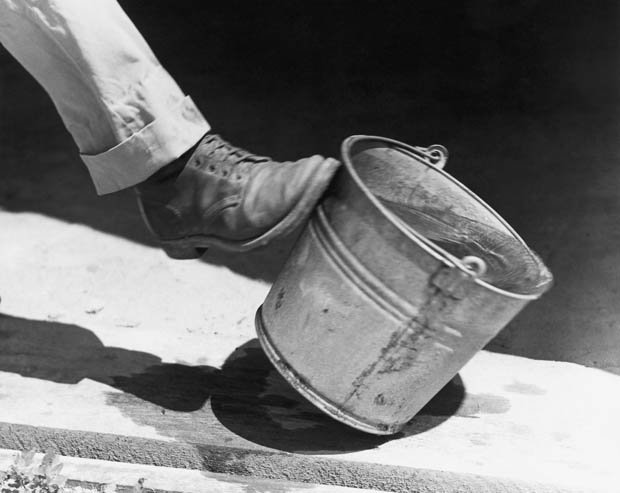
  • Bucket: Dailystar.co.uk
Useful links:
If you liked this, try...


Friday, July 19, 2024

Mental health

Quite a few of my posts cover health, and a few have covered mental health, but I've certainly not talked about depression, for example, as much as I have talked about cancer (links to my mental health related posts below).

Why? Because of stigma, because it is an admission of weakness, because I want to present my 'perfect self' online? Well you know the latter isn't true if you have read my blog in the past.

From about 1998 to 2001 I had clinical depression. It was an awful time, I had two small children and a demanding job and inside I felt completely useless, worthless and kept being told by my other half at the time that 'the problem is there is no problem'. Wow, that was helpful.

I sought help, I got anti depressants. I distinctly remember on day 16 of taking the pills, whilst riding my bike in Cambridge, I suddenly felt like a weight had been lifted from me. The tablets worked! I treated the symptoms, but not the cause. I managed fine - still felt low now and then, but I had two amazing kids and a great job, I kept up with karate, and things were on an even keel.

Around 2007 my marriage started to deteriorate, but by 2012 I was in a very dark place once again, and no drugs, or talking therapy would help. My husband would come home and tell me he was disappointed that his new partner (that's a whole other story) was not being faithful. There's a bit of irony there, no? We were still living together, but I had moved into the tiny spare room onto a put up bed. I contemplated the unbearability of the pain (which I remember as physical, not just mental). But I had two children, who were the one clear perspective in my life at the time. 

To help manage my stress I would go swimming. Just up and down, no thoughts, just moving in the water. It was about the only therapy that helped. I'd been to see Relate on my own early on, and being told that what was being said to me, how my husband treated me was 'mental abuse' was a shock. I didn't realise, didn't recognise, that the person I then loved (unloving takes time) was actually causing me such physical and emotional pain. They put a label on it (abuse). I hadn't wanted to. 

One day when at swimming, I texted my husband that I'd had enough, we had to split - move apart. I couldn't take it any more. When I got home, he said 'I got your message. I thought you'd gone to kill yourself'. That was another mighty shock. Because if that's what he'd thought, why didn't he stop me? That remains a resentment I find hard to forget, though the many other things that were said and done have been comfortably forgotten. Holding on to pain or anger only hurts me, so I don't do it. 

But this story does have a happy ending. No need for detail for the years in between, but I did attend a course by Richard Wilkins called 'Broadband Consciousness'. And that really helped me change my attitude to myself. Richard describes happiness as being like a tide - sometimes it's in, sometimes it's out, it's not a static state of being. For me mental health is like physical health - sometimes it's good, sometimes I get ill, and do what I can to get better, or manage symptoms, so I can lead a fulfilled life and be there for those I love.

But here's the happy ending - because the critical change was that I managed to alter my self-perception. The five days with Richard, Liz and the others gave me the knowledge to understand and challenge that inner voice (which was echo chambering years of undermining). I started to like who I am. 

In 2018 I met my amazing wife and in 2021 we got married. The tide is in.

Liked this? try...

Resources:


Wednesday, May 22, 2024

What a year that was

When I was 13 years old, my father died of a heart attack. Widowed at 44 with two children, my mother found it very difficult to cope and had regular melt downs. I didn’t really know what to do to help her. My 17-year-old brother left home within the year, and I had to become an adult rapidly. I became more introvert at school and depressed for several years. I still miss him today, but I learned to cope and to grieve, over time.

I am writing about this now because trauma, such as the loss of a parent, has a huge mental health impact on children and young adults. In my family we had no warning that my father was going to die so suddenly (if it had happened today, he would have had a much greater chance of survival). But for many families there is notice of bereavement; a terminal diagnosis is not going to truly prepare you, but you are forewarned.

I have spent the last year working with a charity whose services focus on pre-bereavement – that vital support you need to prepare for the death of a parent. Anecdotally and from published research, the impact of a parent’s death on children is life-long. So the better this can be handled, the more open and honest you are, and the more you can help prepare the children for the inevitable, then you can reduce emotional lifetime impact. There is nothing you can do to change the fact that the children will grow up without that parent, but open discussions can be a way to connect and navigate those tough emotions together, and find comfort in planning for the future. 

The charity I worked for was established by Sir Andrew Strauss, a cricketer who lost his wife to a non-smoking lung cancer. If you present at your GP with chest or shoulder pain, or some symptoms that can’t be explained and you say you don’t smoke, lung cancer isn’t often looked for. So, when it is finally diagnosed, it’s often too late as in Andrew’s wife, Ruth’s case. This is the second focus for the charity, to raise awareness and improve early diagnosis which will, quite simply, save more lives.

As ever it’s the people that will leave a lasting impression. The fantastic team I’ve worked with, the dedicated donors, fundraisers and supporters - lending their commercial advice, volunteering or donating, or giving of their personal time outside a celebrity or sports career.

I’ve enjoyed working with the cricket world and the dedicated team at Ruth Strauss Foundation (including the Board and Advisors) and learned about non-smoking lung cancer and pre-bereavement. I’ve expanded my experience in more fundraising areas, and discovered I know a lot more about governance than I realised.

I usually like to add a witty anecdote, but this is a serious subject. Yes, there have been some moments (and I’ve collected a few selfies as well), but mostly it’s been immensely rewarding work.

I do love working in this sector.  I look forward to seeing the charity develop and expand – helping more families, supporting more children who are facing the unthinkable, and saving more lives as diagnosis and care is improved for a cancer whose incidence is increasing rapidly.

So long, and thanks for all the … cricket.  

Useful links

Liked this? Try...

Tuesday, April 23, 2024

Crossing borders

Turtle Dove (C)  
Up until recently, my wife and I lived in Suffolk down a forest track. Our garden was host to deer, rabbit, toads, butterflies, frogs, voles, mice, the odd hedgehog, and snakes. Last year I saw a beautiful three-foot-long grass snake in our pond; the biggest snake I’ve ever seen that wasn’t in captivity.  We had lots of birds in our garden including siskin and, occasionally, Turtle Doves. Whilst doing the ‘Big Garden Birdwatch’ one year I was disappointed that I couldn’t record ‘peacock’. But he was a bit of a nuisance and loved to tease the dogs, standing on the shed roof ‘barking’ at them – seeming to enjoy their inability to reach him. 

When the UK economy decided that extremely high interest rates and impossible mortgages and rents were the way to go, we had no option but to move.  

We had to leave our beloved garden behind and moved ‘over the border’ into Norfolk. We’re still fairly rural, but we can now hear traffic, and neighbours, which we rarely heard before. I’m not saying it was quiet in the forest – the muntjacs barking, the foxes grumbling, the owls and randy hedgehogs created a cacophony some evenings. But then the harsh night sounds would be sprinkled with the song of the nightingale – as sparkling as the stars of the milky way that would lie like a cloud above us.

Long Tailed Tit (C)

So here we are in Norfolk, and we have a new environment to explore. There’s a field next to us and I am sure it will have some stories to share over the coming months. We are building a pond and filling the bird feeder which has already been visited by goldfinch and greenfinch (and a family of mice). Our garden is small in comparison to what we had, but we can make it our own and transform it from a mostly green and brown blank canvas – a new challenge. We also have ducks who visit and have taken on the peacock’s mantle of dog teasing.

As well as new wildlife, we have a new Landlord. He and his father still require access via our house to the field next door and one afternoon I came out to find my landlord’s father (who is nearly 90) in his daughter’s car – stuck. He couldn’t get the automatic out of Park to go through the gates and up to the field. We both tried, and failed, so he decided to go and ask a neighbour for help. In the meantime, I figured out how to get it going, and moved it in from the automatic gates that we had to keep pressing the button for to stop them closing mercilessly on the car. Everyone then arrived at once, my wife, the neighbour and the driver, so we all had tea and a good chat in the kitchen. The East Anglians (I was born in London, it’s not my fault!) discussed local landed gentry and ‘country pursuits’.

My wife drives to Beccles for her work, so it’s not too bad. I have to drive further to see my mother in Southwold (92 and still going strong), but my London commute is definitely a little more challenging. But we are looking forward to our future here, and we need to do more exploring!

Useful links:

Liked this? Try...

Tuesday, January 23, 2024

Long-lived memories


I've posted before about my mum being a costumier - and the odd things she's made over the years. For a while she worked for a publisher producing costumes to go with book tours; these included Raymond Briggs' Snowman, Fungus the Bogeyman, Peter Rabbit and Dilly the Dinosaur to name but a few. She also made a costume for Postman Pat and a buffalo (took two people for that costume) for a carpet company. She made ballet costumes, hats for Paul Revere bar (well, the girls didn't wear much else), and of course multiple theatrical millinery for ballet, opera, muscials (the crown of thorns for Jesus Christ Super Star), a crocodile for Peter Pan (there where wheels underneath so the costume wearer could scuttle about on stage) and something for Mickey Dolenz (who I met), but I can't remember what.

Thanks to the BBC
 She is now 92 and trying to record her days at Stratford with Gielgud and Leigh, and the many other individuals who became famous, is a challenge. Her memory is is - of course - not as good as it was, but certain things will trigger memories. And sometimes those memories will live on and pop up where you least expect. For example, I remembered Dilly the Dinosaur as soon as I saw him - on BBC's QI programme last week. I will admit to watching on playback, not live, because my mother let me know excitedly that she'd seen herself on TV. There was Gyles Brandreth and Sally, with Dilly the Dinosaur (head model).

 
Sally enjoying the company of
Freda the Royal Python
Sally used to sculpt the model for the heads of her creations in clay, then make papier mache casts. Sometimes they'd be reinforced or made of a stuff called samco (which needed setting with acetone). She would work with pearl glue, this weird red moulding material for plaster casting, foam rubber, calico,  buckram... all those materials whose names are familiar to me still. She would also make face masks in latex - for example in the 'Many Faces of Steed' she made a plaster cast of Patrick McNee's face and then created a number of replicas for use in the show (one of whom was my dad). She also made some hats for Madame Tussaud's, including Raquel Welch's white leather stetson and King Henry VIII's jewelled hat. The more I write, the more I remember. 

But back to plaster casting faces - I distinctly remember a camp bed in the kitchen with some chap lying on it, with straws up his nose and a face covered in plaster. Of course I have no idea who it was under there. For many years we also had a plaster cast of Marty Feldman's nose - I can't remember why, but I do remember going to Queens Park Rangers' stadium and meeting him when I was very small - and being just a little bit scared!

At 92 my mum is still going to art classes and life drawing even though she has macular degeneration and her sight is failing. She has multiple health issues of course, but she goes shopping in her motorised buggy, lives independently and if very often out when I call because she is so busy. 

Think of how much is online these days - those photos on social media, pictures and documents scanned and shared. The mountain of information on geneaology sites, and of course the fantastic archives of libraries and press media (a search of the Barnet Press will reveal more for Sally I'm sure). You never know what will pop up where, and whether it will be something to smile about (as with Sally, Gyles and Dilly), or something to make you cringe. 

Liked this? Try...
***Update! I emailed Gyles via his website saying how happy Sally was at seeing that photo, and the gentleman replied wishing her happy birthday and saying 'she's the best'. That's one long-lasting impression you made, Sally!***